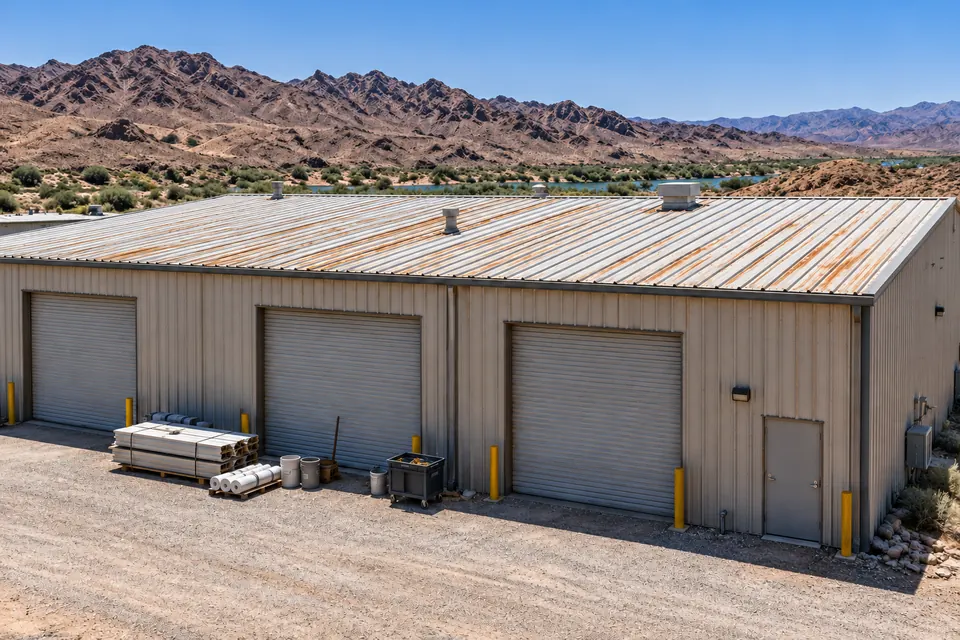
Commercial Metal Roofing
Standing-seam and structural panels, or fastener and lap restoration, for roofs that sit in full sun near the water.
Metal roofing details
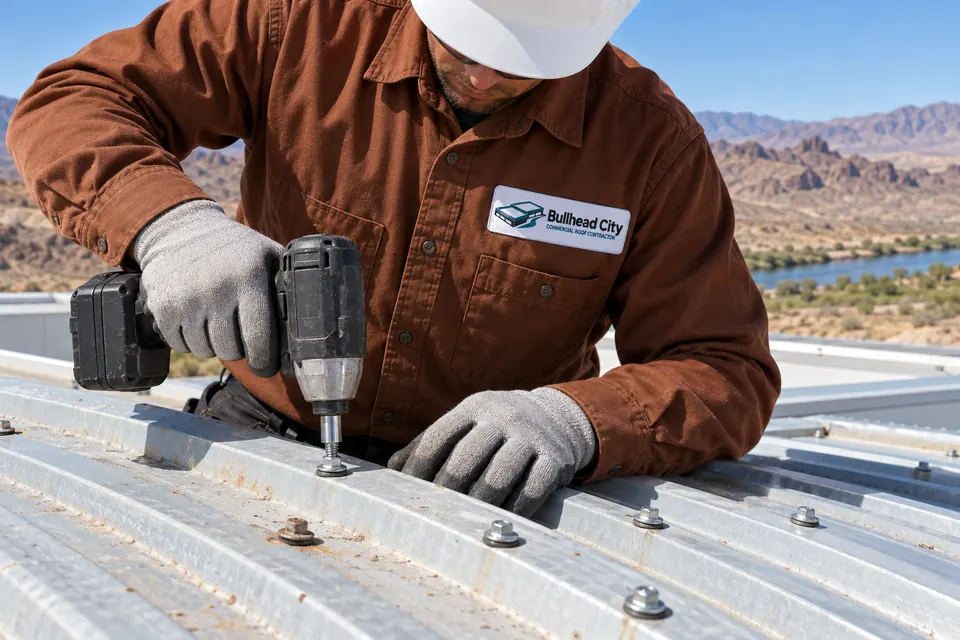
As a commercial roofing contractor serving Topock, we repair and replace metal and membrane roofs on riverfront, marina, and highway-side buildings in full sun.
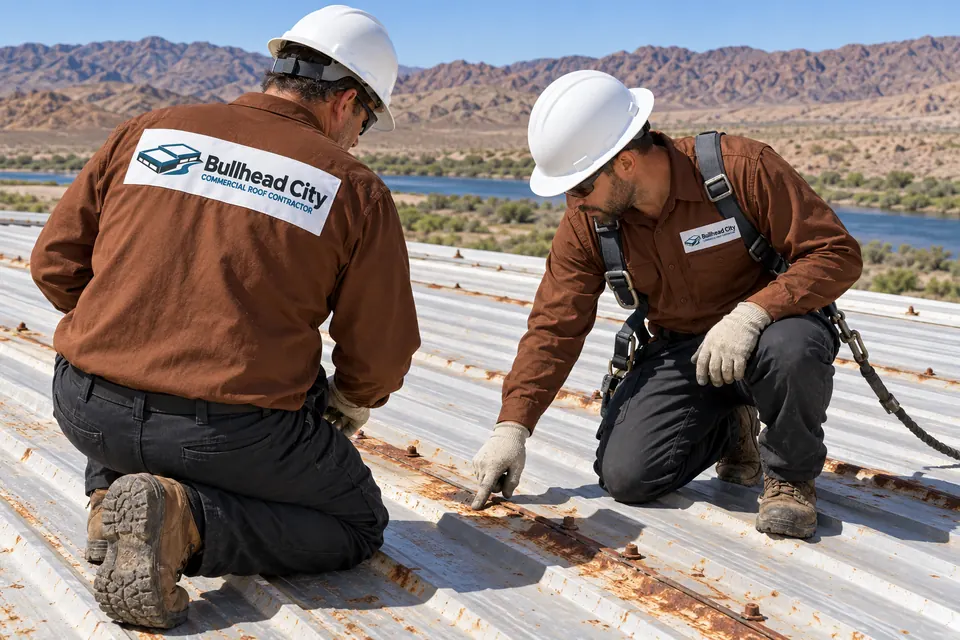
Topock sits where Interstate 40 crosses the Colorado River, at the south end of the service area. Riverfront and marina structures here stand in full sun, and metal is the common roof because it sheds water quickly and holds up to sun on exposed sites.
Moisture near the water and long hours of UV wear metal roofs at fasteners, panel laps, and cut edges first. Topock is unincorporated Mohave County, so roof permits go through Mohave County Development Services.
On riverfront buildings, roof wear shows up as rust, drips, and noise. Each pair points to what is happening above.
Orange flakes falling from above mean the underside of the panels is corroding.
Water reaching the steel through laps or fastener holes, rusting the panels from the inside out.
Leaks spaced evenly along a beam follow the fastener rows above.
Fastener washers cracked by years of sun, so each screw lets a little water in.
Steady afternoon gusts make loose metal noisy.
Loose trim or ridge caps, and panel ends at the eave lifted enough to move.
A chalky film on your hand after touching the metal shows the finish is wearing.
Factory finish broken down by UV. Once it wears through, bare steel starts to rust.
Stains circling a pipe through the ceiling come from its roof flashing.
A pipe boot or flashing collar on the metal roof, cracked from heat and movement.
On sun-exposed riverfront structures, these are the changes that last.
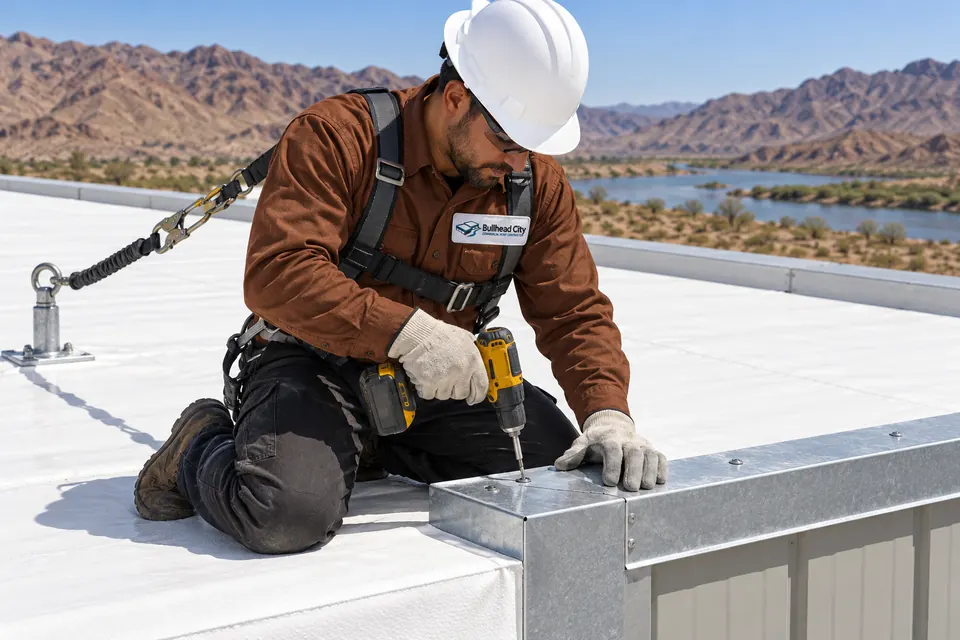
Standing-seam clips keep fastener holes out of the sun and rain, removing the most common leak point.
Light finishes reflect heat and resist chalking on roofs with no shade.
Edges and laps sealed and treated during installation slow rust where water lingers.
New screws and washers stop the slow drips that follow fastener rows on older panels.
Riverfront roofs here are mostly metal, with membrane on low flat sections.
Standing-seam and structural panels, or fastener and lap restoration, for roofs that sit in full sun near the water.
Metal roofing details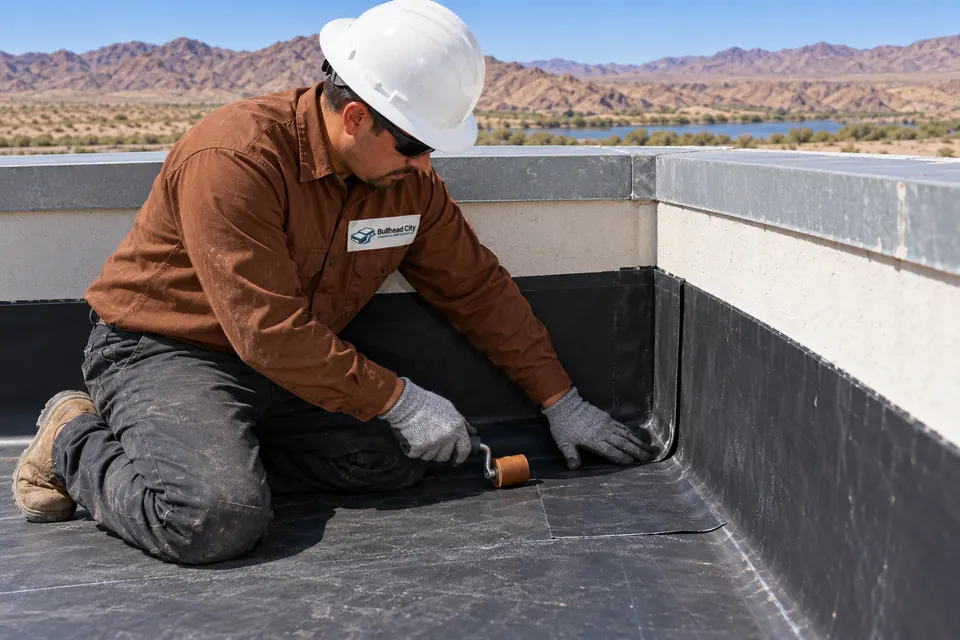
Low flat roofs on marina offices and add-ons take EPDM well, with flexible flashing at walls and pipes.
EPDM roofing detailsCall and describe where the rust or drips appear. Fasteners and laps above that spot are the first check.
(623) 310-0188Exposed sites call for a close look at fasteners and rust before any panel decision.
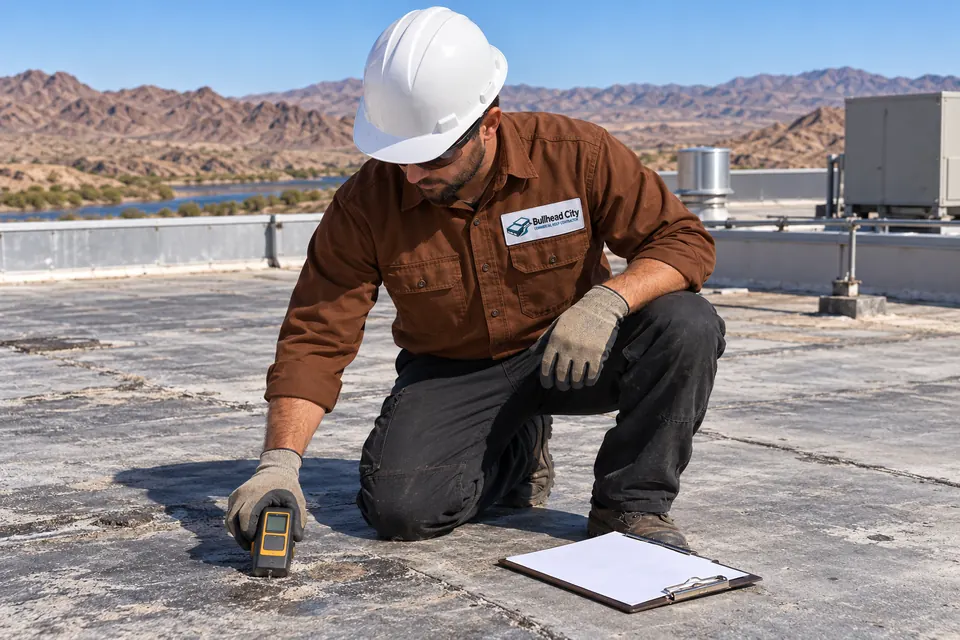
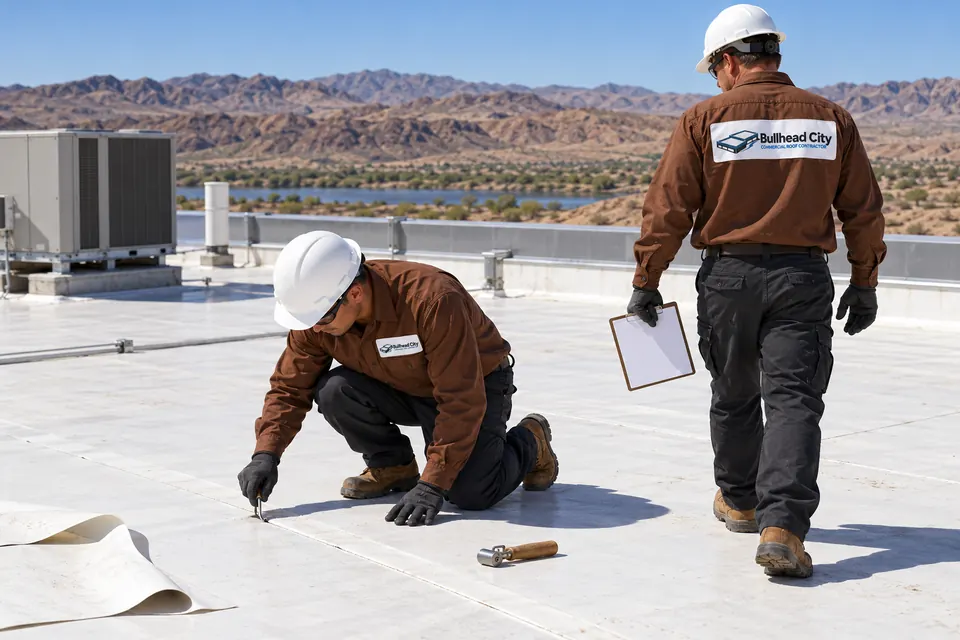
Fastener rows, panel laps, ridge caps, and cut edges are checked, rust is mapped, and any membrane sections get moisture readings.
Intact panels with loose fasteners get restored. Rust-through across many panels, or widespread storm damage, points to new panels.
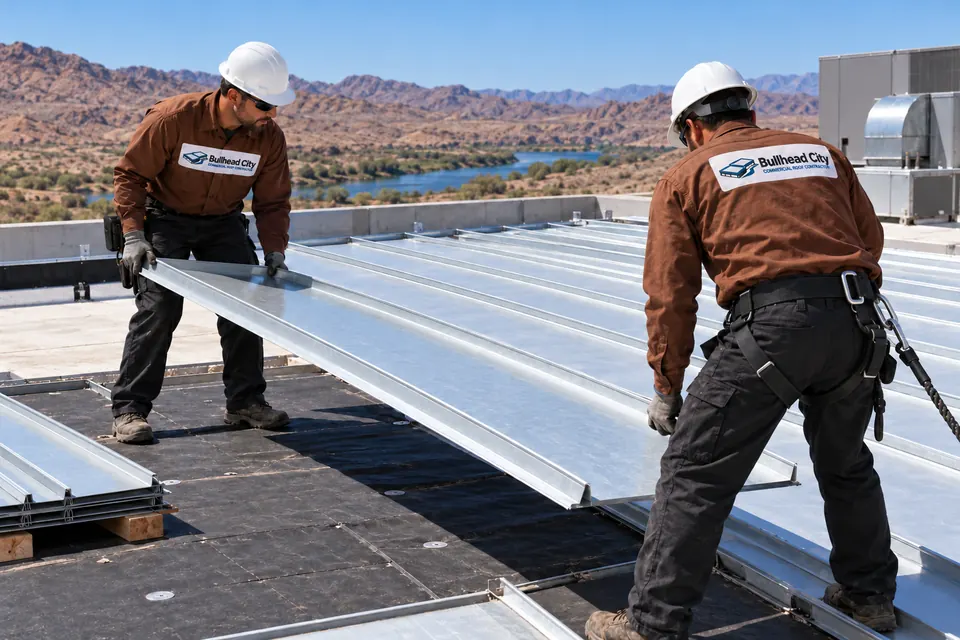
New panels go down on clips fastened for the design wind, or old ones get new fasteners, washers, and lap sealant.
Cut edges and scratches are treated, trim and penetrations are sealed, and a final walk checks every fastener row.
Communities north of Topock along the river and SR 95.
Storm checks on small roofs just north.
Long-span warehouses and shops on SR 95.
Storefront roofs where some parcels are tribal land.
Retail and hospitality roofs at the north end.
Answers about rust, fasteners, permits, and roofs near the water.
At least twice a year: in spring before the summer heat, and in fall after monsoon season ends. Add a check after any severe storm. On metal roofs near the water, those visits focus on fasteners, laps, sealant at trim, and any new rust.
Moisture lingers. Damp mornings near the water leave dew on the panels, and that moisture sits in laps and around fasteners. Wherever the factory finish is scratched or worn, bare steel starts to rust. Sealing laps and touching up scratches slows it.
Surface rust, yes. Light rust is cleaned and treated, and fasteners and lap sealant are renewed. Panels rusted through, or rust across most of the roof, call for replacing those panels or the whole roof.
Metal for sloped roofs, membrane for low flat ones. Metal sheds water quickly and holds up to sun on exposed sites. Flat add-ons and low offices take EPDM or TPO, flashed carefully where they meet walls and the metal roof.
Mohave County Development Services. Topock is unincorporated county land, and the county's permit application includes a re-roof option for commercial work. The county also runs a building and permitting office in Bullhead City.
On a building in full sun, a light finish helps. Light factory finishes on metal reflect more sun than dark ones and show less fading over time. Whether that lowers cooling costs depends on insulation and how the building is used.
Yes. Rubber washers under exposed fasteners dry out and crack in the sun, and screws loosen as panels expand and contract each day. Replacing them, sometimes with a slightly larger screw, stops leaks along the fastener rows.
Steady wind across open water and sudden monsoon gusts both pull at roof edges, trim, and ridge caps. Loose pieces start to move, and each storm loosens them more. Edge metal and trim fastened at the right spacing stay put.
Send the building size and what the roof is made of, or call and describe the rust, drips, or noise.
Leave a name and number, and a roofing contact will call you back about your building.
Or call (623) 310-0188 now