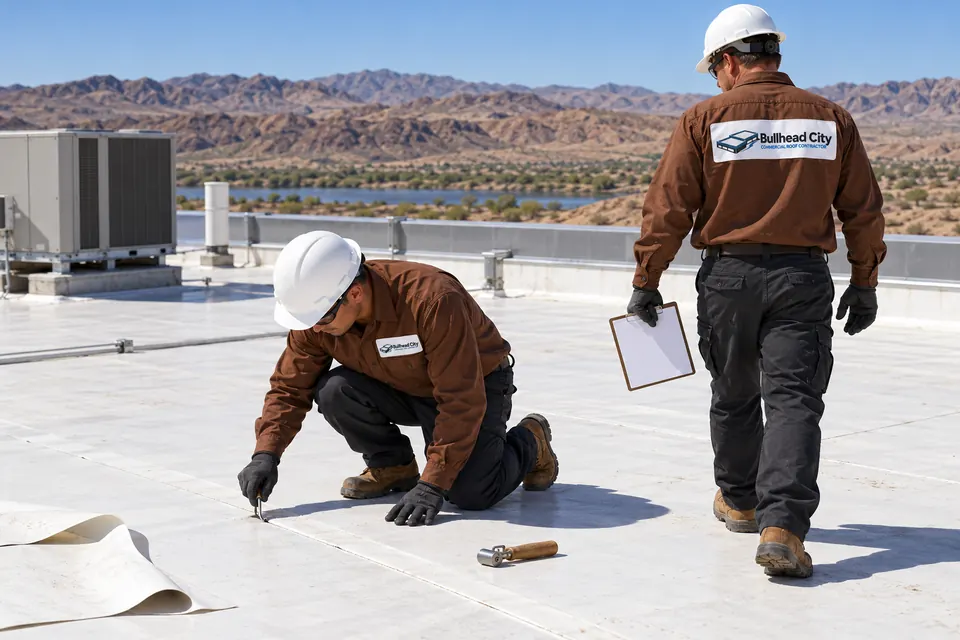
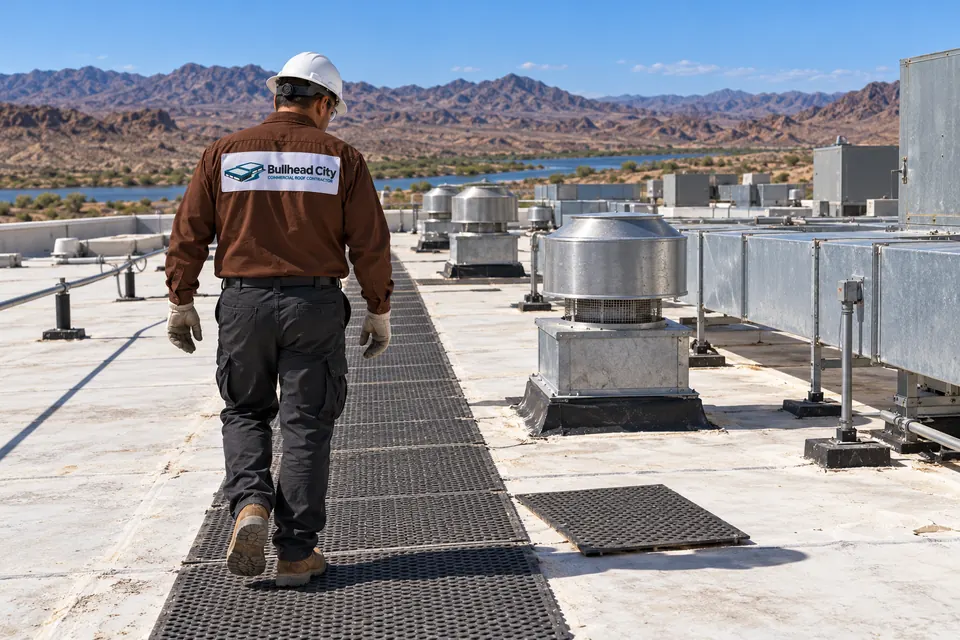
Roofer walking a walkway-pad path across a large industrial roof lined with exhaust fans and ductwork

Bullhead City Commercial Roofing Services

Our commercial roofing services in Bullhead City cover TPO, EPDM, industrial, and metal roofs, from a single repaired curb to a full replacement.

  • SystemsFour roof systems
  • Every jobStarts with an inspection
  • Work typesRepair, recover, replace

Commercial Roofing Services In Bullhead City

Four systems, each matched to a different kind of building. The fit lines show where each one belongs.

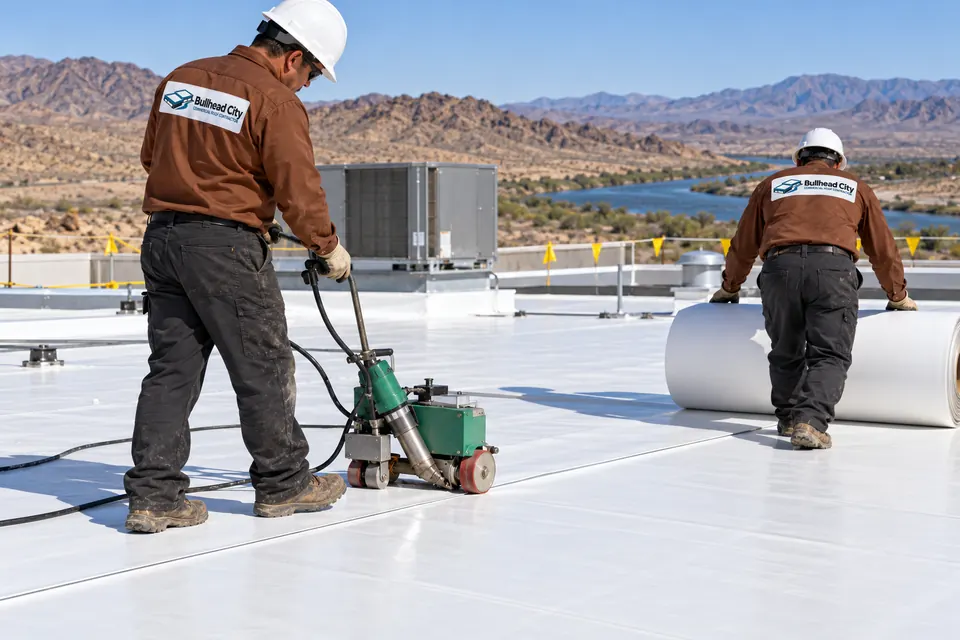
Roofer guiding an automatic hot-air welder along a white TPO seam while a second roofer unrolls the next sheet

TPO Roofing

White welded membrane for flat and low-slope decks, with every lap probed.

Built for
Strip retail, offices, and clinics with wide flat roofs
Another system wins when
the building is pitched steel, or the deck is crowded with odd shapes and small pipes
TPO roofing contractor
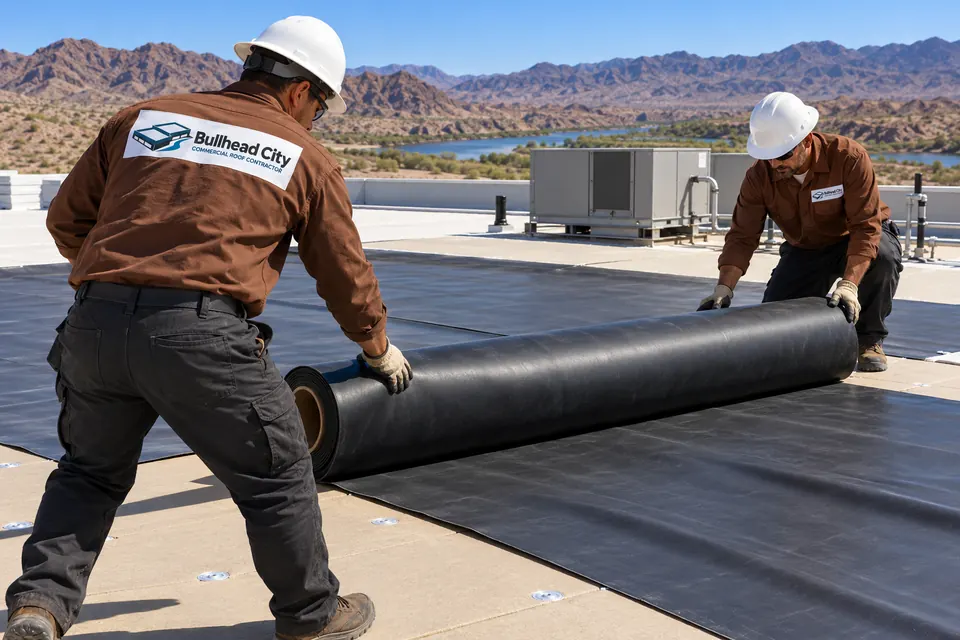
Crew unrolling a large black EPDM sheet over cover board on a flat roof

EPDM Roofing

Synthetic rubber sheets with taped or glued seams for complicated roofs.

Built for
Irregular roofs, add-ons, and existing EPDM roofs
Another system wins when
the deck is wide and simple, where welded TPO costs less
EPDM roofing contractor
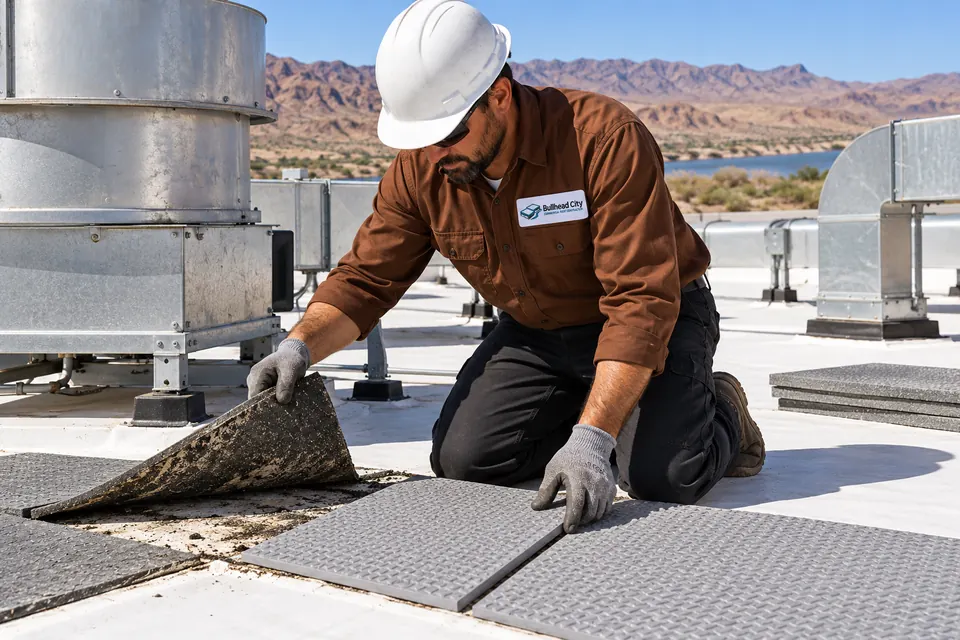
Roofer replacing a worn walkway pad around rooftop equipment on a plant roof

Industrial Roofing

Phased work on long-span roofs with production or storage below.

Built for
Warehouses, shops, distribution space, and light manufacturing
Another system wins when
the building is a small office with little rooftop equipment
Industrial roofing contractor
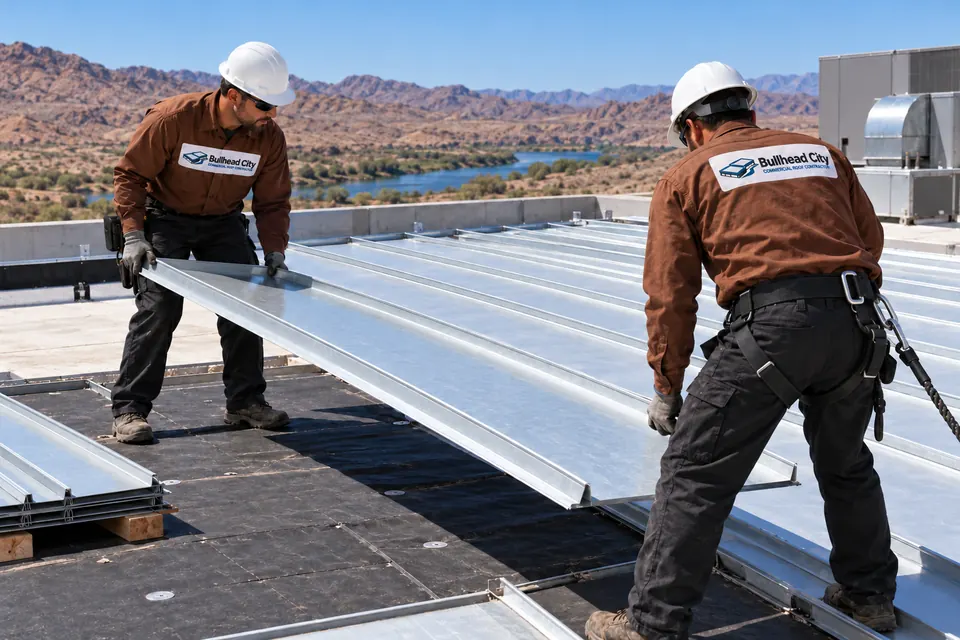
Crew lifting long standing-seam metal panels into place on a low-slope commercial roof

Commercial Metal Roofing

Standing-seam and structural panels, fastener restoration, and retrofit framing.

Built for
Pre-engineered steel buildings, shops, marinas, and sloped retail
Another system wins when
the roof is flat with many units and no plan to add slope
Commercial metal roofing contractor

Which Building Gets Which Roof

Six common building types here, the system each usually gets, and the details that need watching over its life.

BuildingCommon systemRooftop trafficWhat needs watching
Strip retail and officesTPOModerate, along HVAC service pathsCurb flashing, rear drains, front scuppers
Restaurants and hospitalityTPO or EPDMHeavy around kitchen fansGrease at fans, walkway pads, curb heights
Warehouses and shopsMetal or TPOLight, spread over a big areaPonding mid-span, fasteners, skylights
Pre-engineered steel buildingsMetalLightFastener spacing for design wind, panel laps
Older roofs with many add-onsEPDMVaries with equipmentTie-ins, shrinkage at walls, pipe boots
Marinas and riverfront structuresMetalLightRust at laps and cut edges, fastener washers

Can't Tell Which Roof You Have?

Call and describe the surface: white or black, rubbery or hard, flat or ribbed. That is enough to start the conversation.

(623) 310-0188

Every Service, The Same Four Steps

The system changes from job to job. The order of the work does not.

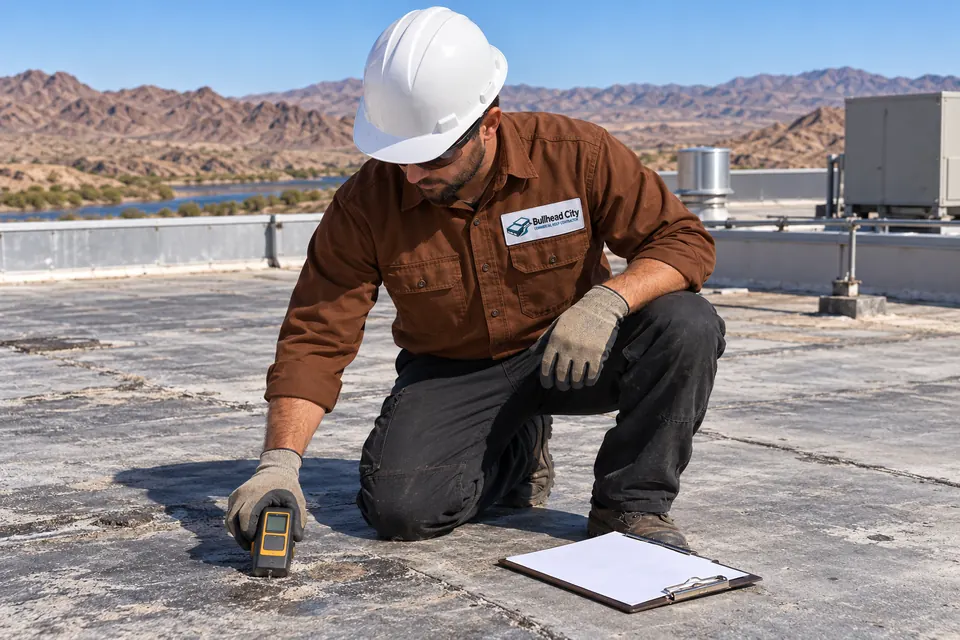
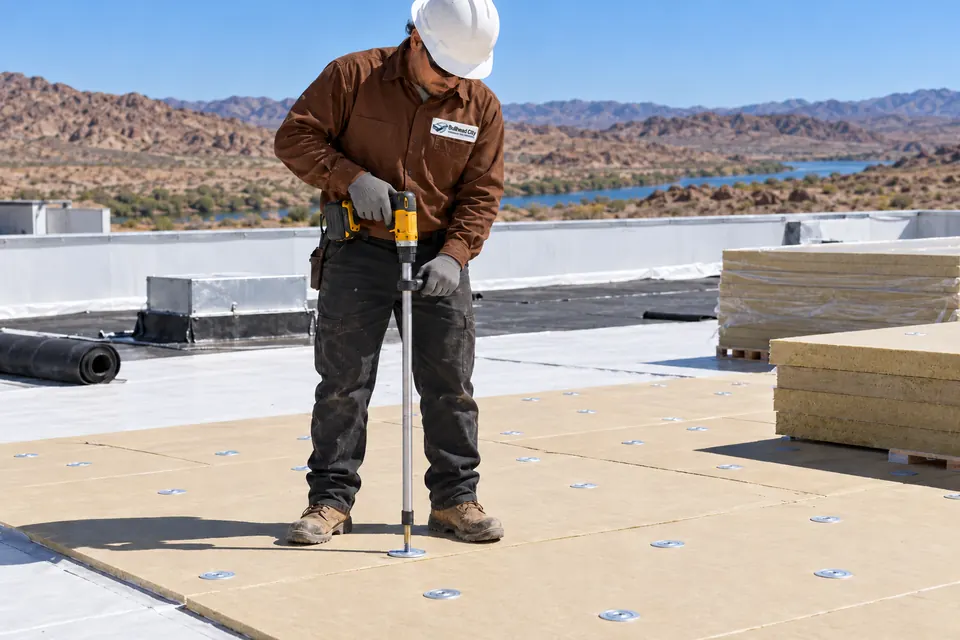
Roofer pressing a moisture meter against a worn gray low-slope membraneRoofer fastening insulation boards with plates and a stand-up screw gunTwo roofers walking a light-colored membrane roof, one kneeling to check a seam
  1. Step 1

    Inspect Your Roof

    Seams, curbs, drains, edges, and fasteners are checked across the whole roof, with moisture readings that show what is wet below the surface.

  2. Step 2

    Match The System

    Building use, roof slope, and rooftop equipment point to TPO, EPDM, metal, or an industrial plan, and wet or dry insulation sets repair versus replacement.

  3. Step 3

    Stage And Build

    Materials are staged away from entries and docks, and the roof is rebuilt one section at a time, each sealed before the crew leaves.

  4. Step 4

    Detail And Walk Out

    Curbs, parapets, pipes, and edges get new flashing, drains are cleared, and the finished roof is walked with you or your facility manager.

Choosing A Roof Service

Answers about systems, costs, permits, and scheduling.

How do I know which roof system my building needs?

Start with slope, foot traffic, rooftop equipment, and how long you plan to keep the building. Flat retail and offices lean toward TPO, irregular roofs with many add-ons toward EPDM, and steel buildings and marinas toward metal. An on-roof inspection confirms the choice.

Can you work on a roof someone else put on?

Yes. Most repair calls involve roofs installed years ago by someone else. The first visit identifies the system and its condition, since repair materials have to match it: TPO welds to TPO, EPDM takes primed tape, and metal needs matching fasteners and sealant.

What is the difference between a repair, a recover, and a replacement?

A repair fixes specific spots, such as a lap, curb, or drain. A recover adds new roofing over the old roof when the insulation below is dry. A replacement removes the old roof down to the deck. Moisture readings decide between the last two.

Which roof costs less: TPO, EPDM, or metal?

Cost turns on roof size, the layers coming off, insulation, and detailing more than on the system name. TPO is often the lower-cost choice on wide, simple decks. Metal costs more up front and lasts longer. Rooftop equipment and access change every estimate.

Can one building use more than one roof system?

Yes, and many buildings here already mix them. A steel shop with a flat office add-on can carry metal on the main roof and TPO on the low section. The transition needs careful flashing where the two roofs meet.

Which office issues a commercial roof permit here?

The one that covers the address: the City of Bullhead City inside city limits, Mohave County in unincorporated areas, or the Fort Mojave Building Department on reservation land. We confirm which one applies before scheduling the work.

How is roof work scheduled around summer heat?

Crews start early. Summer afternoons in Bullhead City are hard on people and on some materials, so most work happens in the morning. Monsoon forecasts also shape the day's plan, and every opened section is closed before a storm can reach it.

How do I prepare for a roof inspection?

Gather what you know: roof age, past repairs, leak locations by room, and any old roofing proposals or warranties. Clear access to the roof hatch or ladder, and let staff know someone will be on the roof. Photos of ceiling stains help match leaks to roof spots.

Pick A System, Or Let The Roof Decide

Send what you know about the roof, or call. The inspection settles which system fits.

Call (623) 310-0188