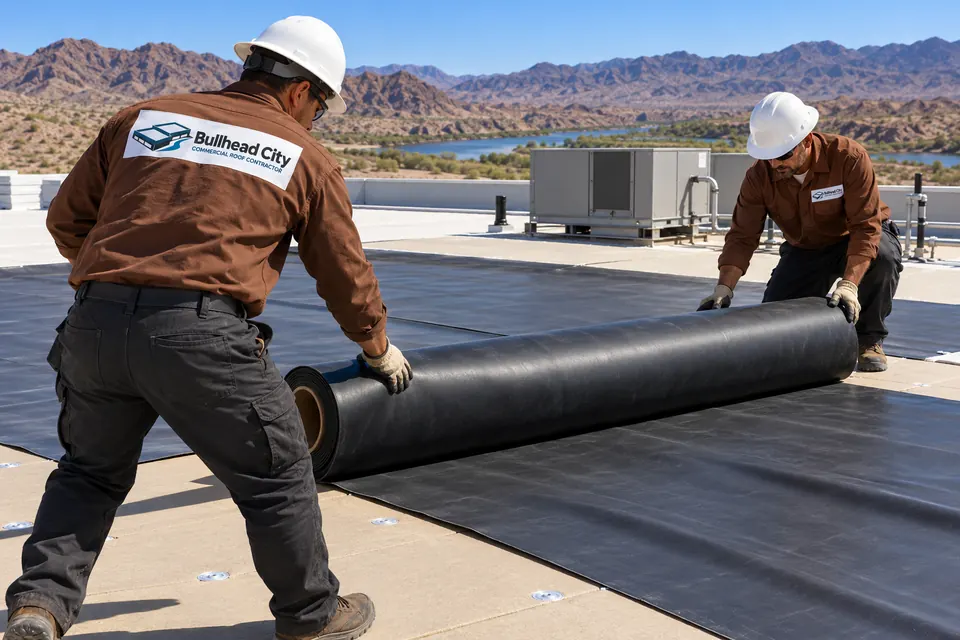
EPDM Roofing
An EPDM roof suits decks crowded with pipes and odd shapes, where big rubber sheets mean fewer seams to keep watertight.
Compare EPDM roofing
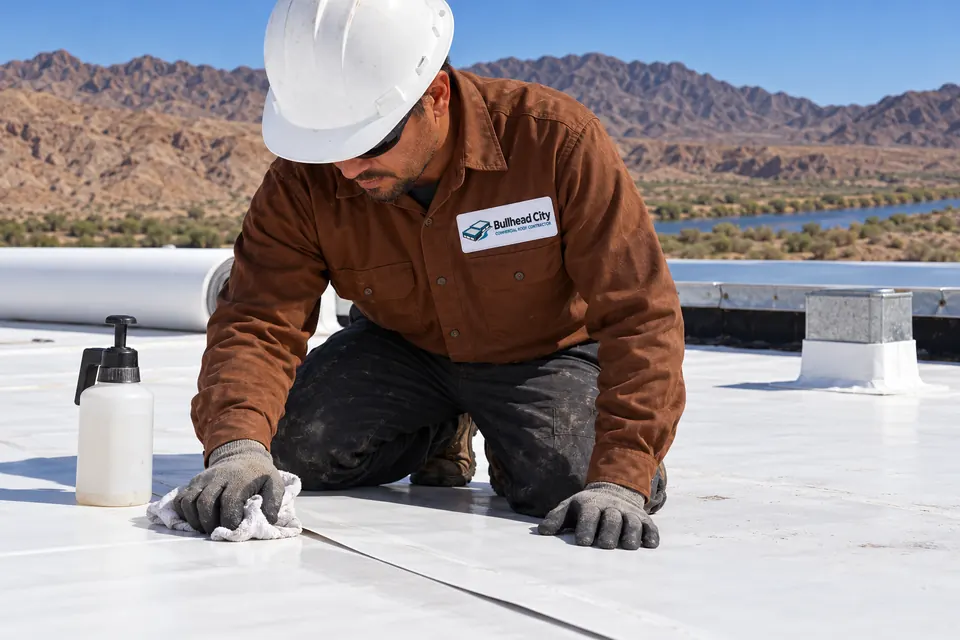
As a TPO roofing contractor in Bullhead City, we install, replace, and repair white membrane roofs on retail, office, and storage buildings, with every seam heat-welded and probed.
TPO fits flat and low-slope decks that can drain. These lists sort the roofs that fit from the ones another system serves better.
Each pair links a sign inside the building to the TPO detail that tends to cause it.
Stains that run in a line across the ceiling often follow a membrane lap overhead.
A weld at a TPO lap has a gap or a cold spot. A seam probe finds it in minutes, and a hot-air welder closes it.
Water near a supply duct means the curb above is letting rain in.
Membrane flashing at the HVAC curb has shrunk or pulled from its corners after years of heat.
Mid-room stains far from any wall point to water sitting on the deck.
A drain basket clogged with dust, or a low spot in the insulation, holds water against field seams.
Streaks along an exterior wall appear after gusty storms.
Edge metal or a termination bar has loosened, and wind lifts the membrane edge so rain slips under it.
Leaks a week after an HVAC visit trace to the path the technician walked.
Dropped screws and tool punctures in the membrane near the units. Walkway pads keep it from happening again.
Most TPO jobs here follow one of four paths. A moisture check decides which one fits your roof.
| Path | When it fits | What the work involves |
|---|---|---|
| Weld repair | Damage is local: an open lap, a puncture, or a pulled curb corner | Clean the old membrane, weld on a TPO patch or new flashing, probe the welds |
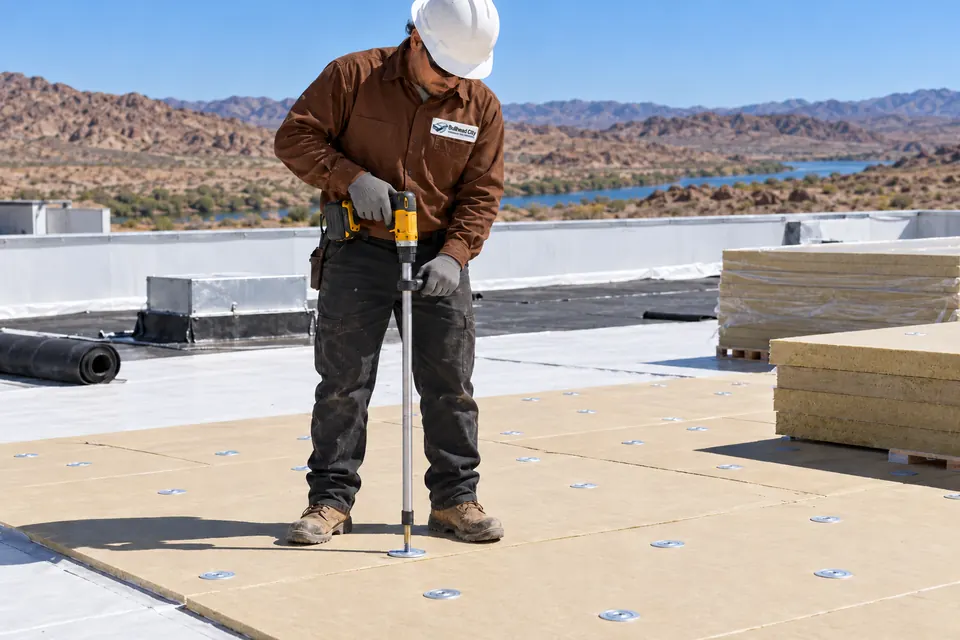
| Recover over the old roof | Insulation tests dry and the deck still holds fasteners | Cover board and new TPO fastened over the existing roof, with wet spots cut out first |
| Tear-off and replace | Wet insulation across large areas, or the deck already carries too many layers | Remove to the deck in sections, add tapered insulation, fasten or adhere new TPO |
| Heavier membrane | Roofs with steady service traffic or long hours of direct sun | A thicker TPO sheet, plus welded walkway pads along service paths |
These gains come from the white surface and the welded seams. How much each one shows depends on insulation and drainage.
White TPO reflects a large share of sunlight, so less heat soaks through to the rooms below.
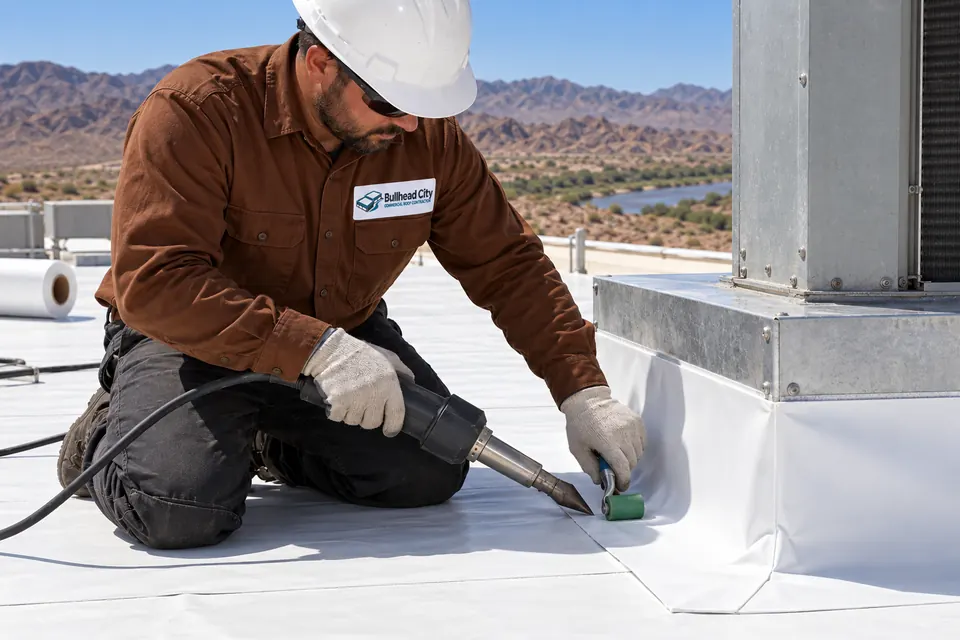
Heat-welded seams join the membrane together, which stands up to wind-driven monsoon rain.
Tapered insulation and crickets go in during replacement, so water heads to the drains.
Later patches weld to clean, well-kept TPO, so a curb or puncture repair becomes part of the sheet.
Call and tell us which unit it sits under. Curb flashing is the first detail we check on a TPO roof.
(623) 310-0188Four steps from the first moisture reading to the last probed weld, with the building open below.
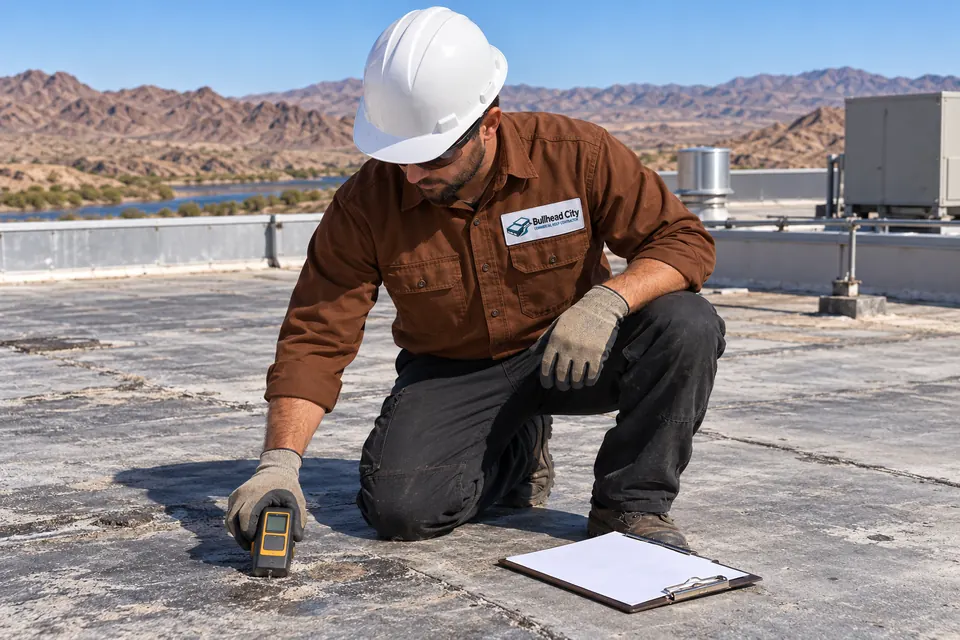
Moisture readings across every section, plus a look at each lap, curb, and drain, show whether the old roof can stay under a recover layer.
Tapered insulation and crickets are laid out toward the drains, sized for the city design rainfall of 2 inches per hour.
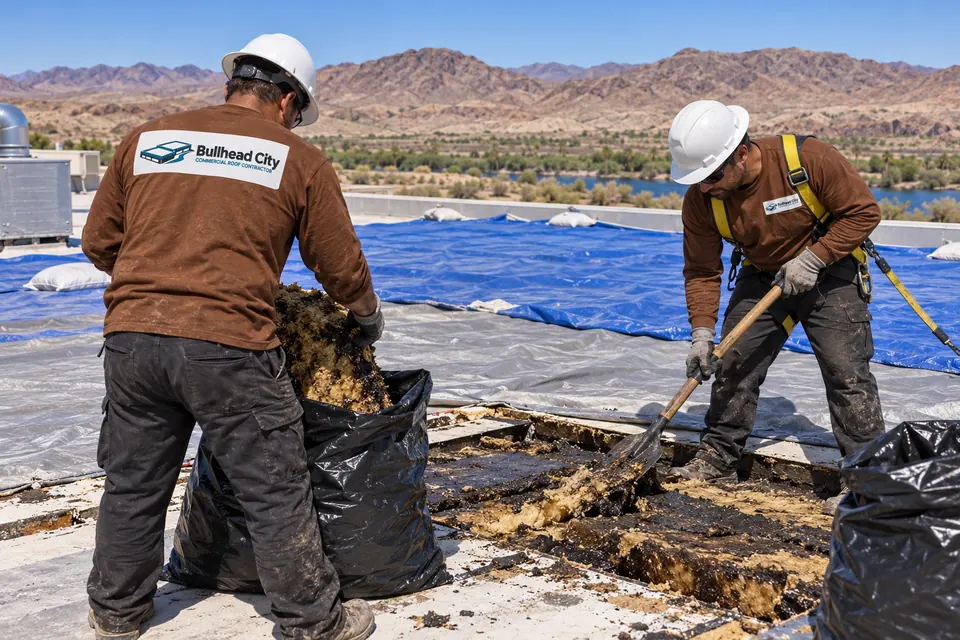
Insulation and membrane go down section by section, and an automatic welder fuses each lap as the sheets are rolled out.
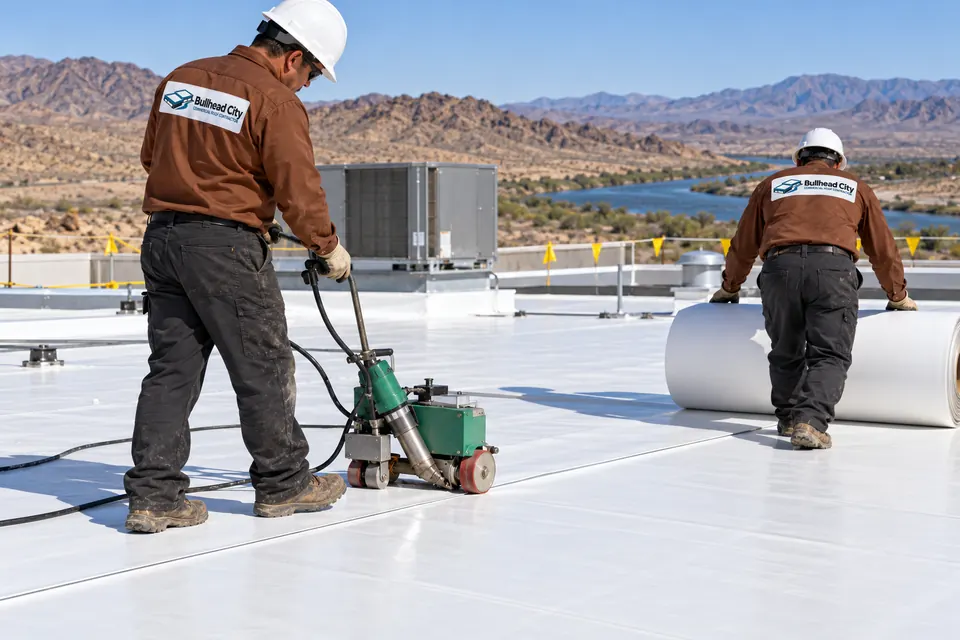
Curbs, parapets, and pipes get welded flashing, then every seam is probed and the drains are cleared.
Some buildings on SR 95 are better served by another system, or by TPO handled as part of a larger industrial job.
An EPDM roof suits decks crowded with pipes and odd shapes, where big rubber sheets mean fewer seams to keep watertight.
Compare EPDM roofing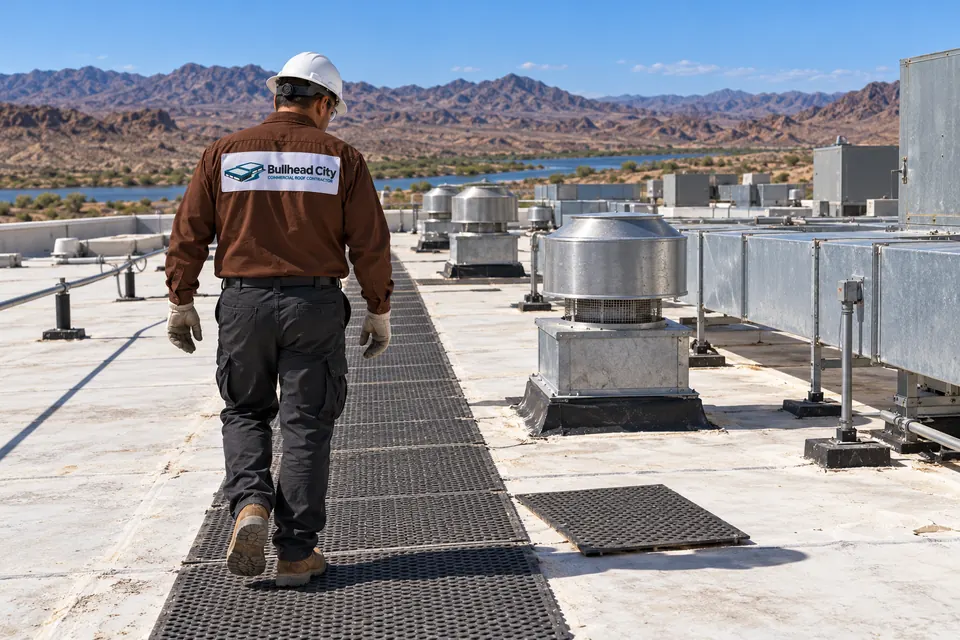
Long warehouse roofs pair TPO with walkway pads and phased work around production, which industrial roofing covers in detail.
See industrial roofingAnswers about seams, surface, and upkeep on white membrane roofs.
A typical TPO job in Bullhead City starts with a moisture check of the deck and insulation. Then the old roof is removed or covered, new board and membrane are fastened or adhered, every seam is hot-air welded and probed, and curbs, parapets, drains, and HVAC stands are flashed.
It can be, with the right details. Restaurants put grease, heat, and foot traffic on the roof around exhaust fans. Walkway pads, a grease containment box at each fan, and careful curb flashing protect the membrane. EPDM is the other common choice on these roofs.
Dust settles on the white surface and dulls it. A rinse with low-pressure water and a mild cleaner brings back the color without harming the membrane. Clearing the drains on the same visit keeps that dust from packing the outlets before the next storm.
On any roof with regular service traffic, yes. Technicians walking to rooftop units wear paths and drop screws that puncture the membrane. Welded walkway pads mark a route from the hatch to each unit and spread the load where boots land most.
It depends on roof size, the layers coming off, and weather. A single-story strip roof is done in sections, each torn off and sealed before the crew leaves. Monsoon afternoons shorten summer work days, so crews start early and close each section before storms build.
White is the usual choice here because it reflects the most sun. Tan and gray sheets exist for roofs seen from the street or from a taller building next door. Darker colors absorb more heat, so they belong on roofs over unconditioned storage more than over offices.
Most seam failures start at installation. A weld made on a dirty lap, at the wrong heat, or too fast leaves a cold spot that opens after a few summers of heat cycling. Cleaning each lap and probing every weld before the crew leaves catches those spots early.
Send the roof size and what is happening on it, or call to talk through repair versus replacement.
Leave a name and number, and a roofing contact will call you back about your building.
Or call (623) 310-0188 now