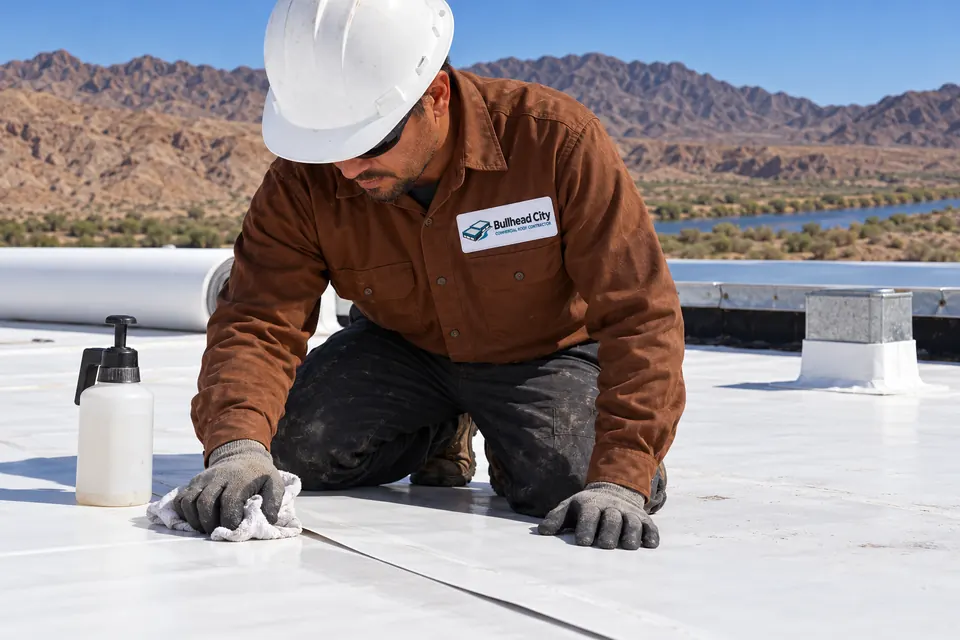
TPO Roofing
White TPO with welded seams is often the lower-cost choice on wide, simple decks over air-conditioned space.
Compare TPO roofing
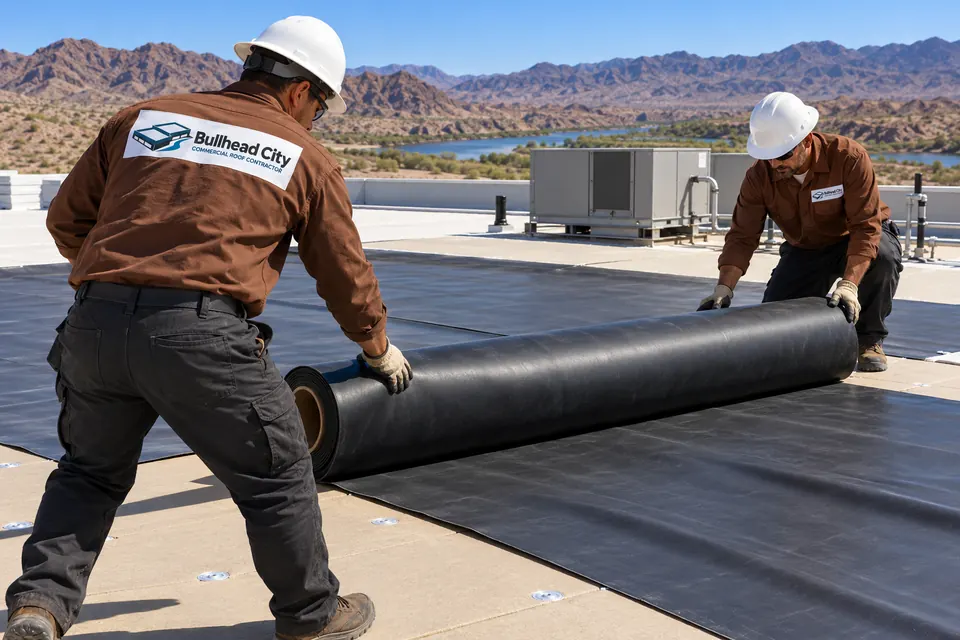
As an EPDM roofing contractor in Bullhead City, we install, extend, and repair rubber membrane roofs on buildings with odd shapes, crowded equipment, and past repairs.
EPDM handles movement and odd layouts well. It asks for careful seam prep and a plan for heat on a black surface.
A rubber roof shows its age in a few predictable places. These pairs connect each one to what you notice inside.
Spots that creep wider each storm usually sit below a seam.
Seam tape or adhesive at an EPDM lap has dried and lifted at its edge, letting water wick into the joint.
Moisture high on a wall, right under the ceiling, comes from the roof edge.
The membrane has shrunk and pulled away from the parapet, opening a gap at the inside corner.
Water beside a restroom or kitchen vent stack points to the pipe above.
A pipe boot has split from sun and age, or its clamp has loosened around the vent.
Slow-drying ceiling tiles mean water stands on the roof long after the rain.
A ponding ring around a low spot. EPDM handles brief standing water, but long ponding wears the seams nearby.
Upstairs spaces under a black roof heat up faster than the rest of the building.
Black EPDM absorbs sun. A white-on-black sheet or a reflective coating changes what the roof takes in.
EPDM work here splits into repair, extension, and replacement. The age of the sheet and the condition of the seams decide which one.
| Path | When it fits | What the work involves |
|---|---|---|
| Seam and flashing repair | The sheet is still flexible and leaks trace to laps, boots, or corners | Clean and prime the old rubber, apply new seam tape or cover strips, replace split pipe boots |
| Tie-in to an existing EPDM roof | An addition or one damaged section on a roof that is otherwise holding | New EPDM spliced to the old sheet with primed tape, so the roof stays one system |
| Full EPDM replacement | The rubber is cracked or shrunk across the roof, or insulation is wet | Remove to the deck, new insulation and cover board, large sheets with as few seams as possible |
| Reflective option | Black EPDM over occupied space that runs hot | White-on-black membrane at replacement, or a compatible reflective coating on a clean, sound sheet |
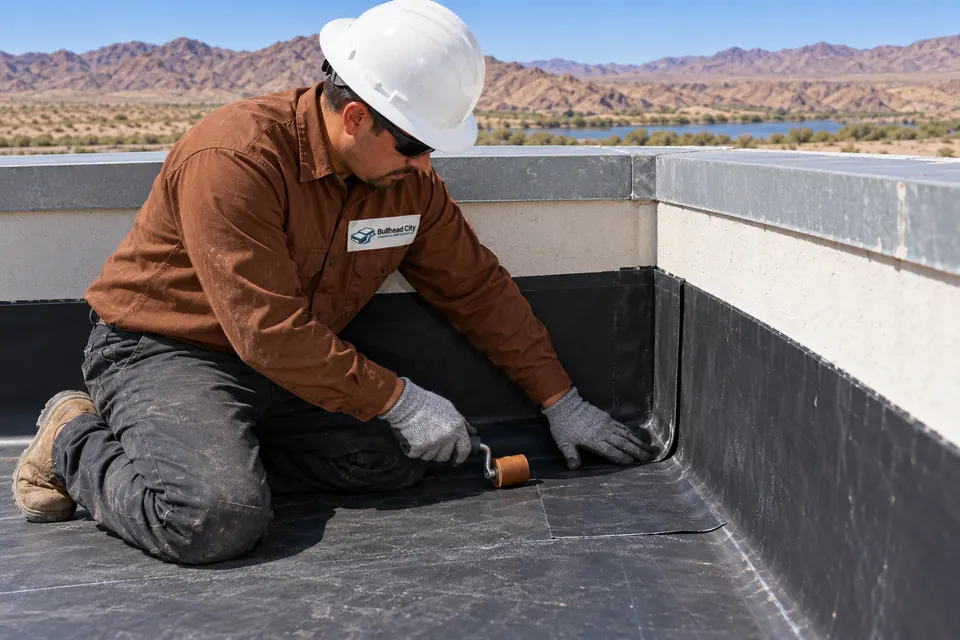
EPDM earns its place on complicated roofs. These are the gains owners see when the sheet and seams are installed well.
Large rubber sheets cover irregular sections with fewer laps to keep watertight.
The rubber stretches and returns as hot afternoons give way to cooler nights.
Molded boots and flexible flashing wrap pipes and curbs closely.
Additions and repair sections splice onto the same system with primed tape.
Call and describe where the stain shows up inside. Shrinkage at parapets is one of the first things we look at on EPDM.
(623) 310-0188The same four steps whether the job is a tie-in section or a full replacement.
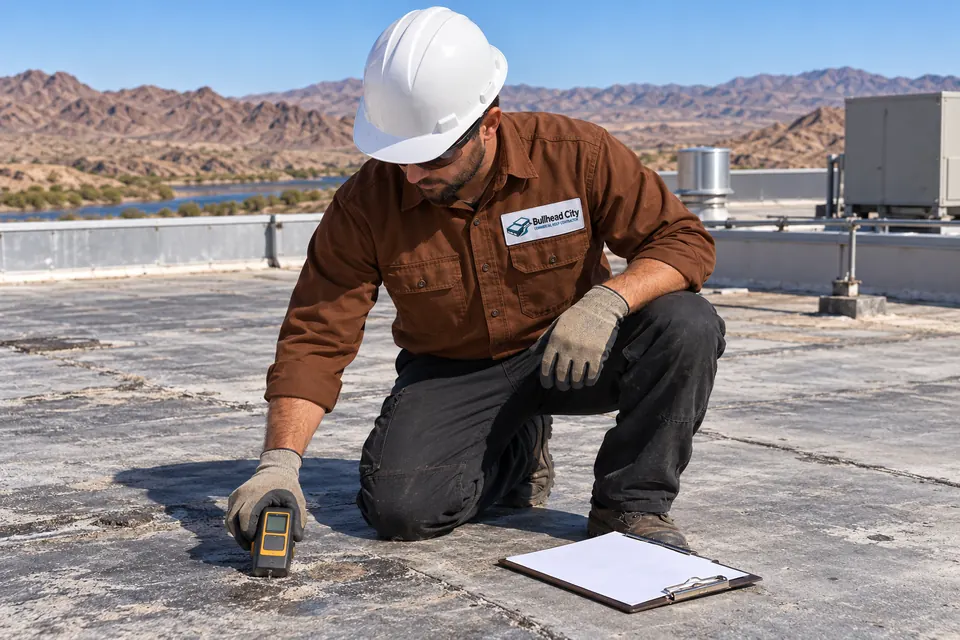
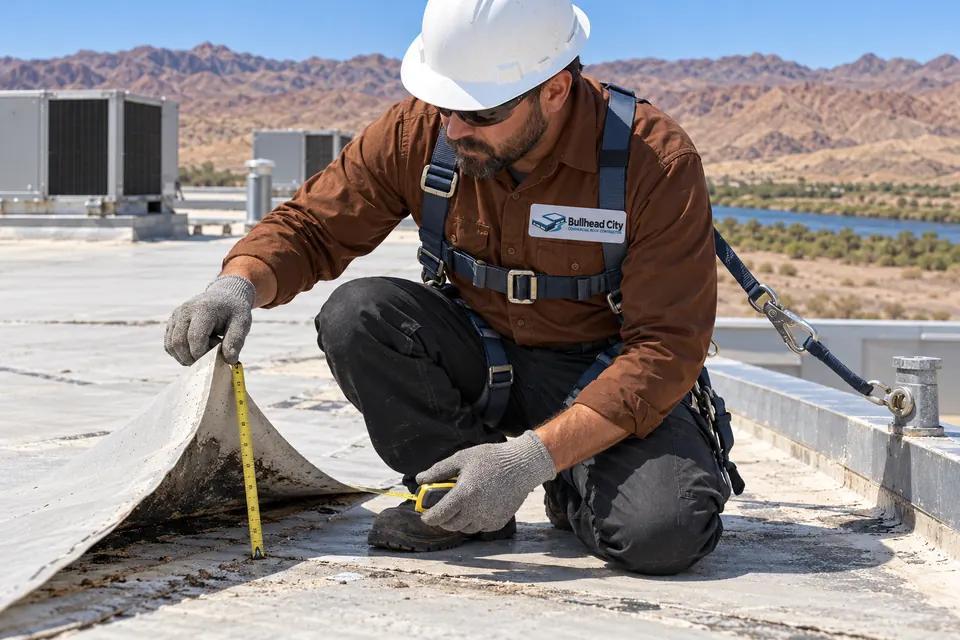
Seams get pulled at by hand, the sheet is checked for shrinkage at every wall, and a moisture meter maps wet insulation below.
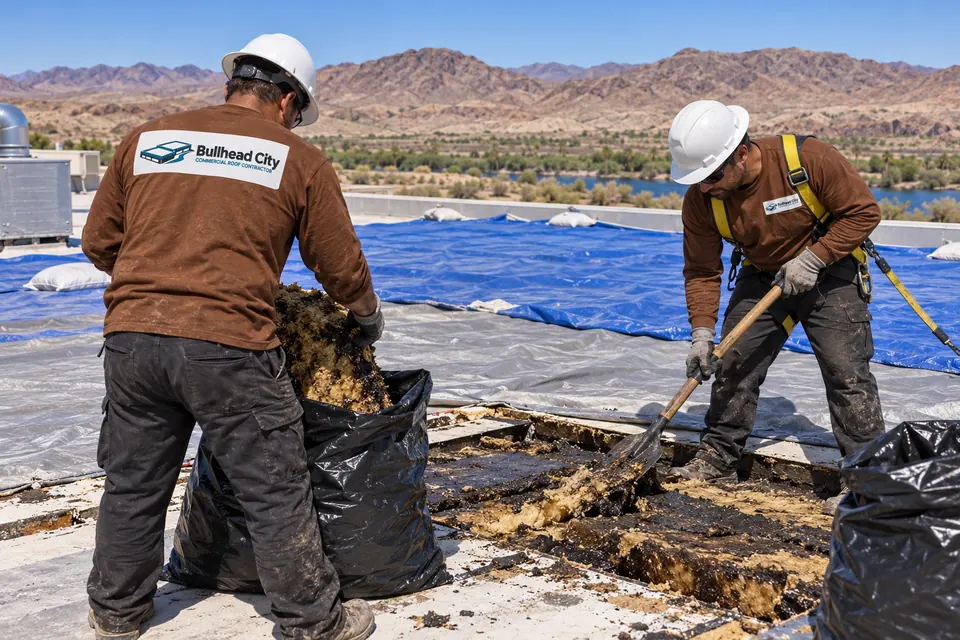
Old roofing comes off in sections down to the deck, and new insulation and cover board are fastened before any rubber is laid.
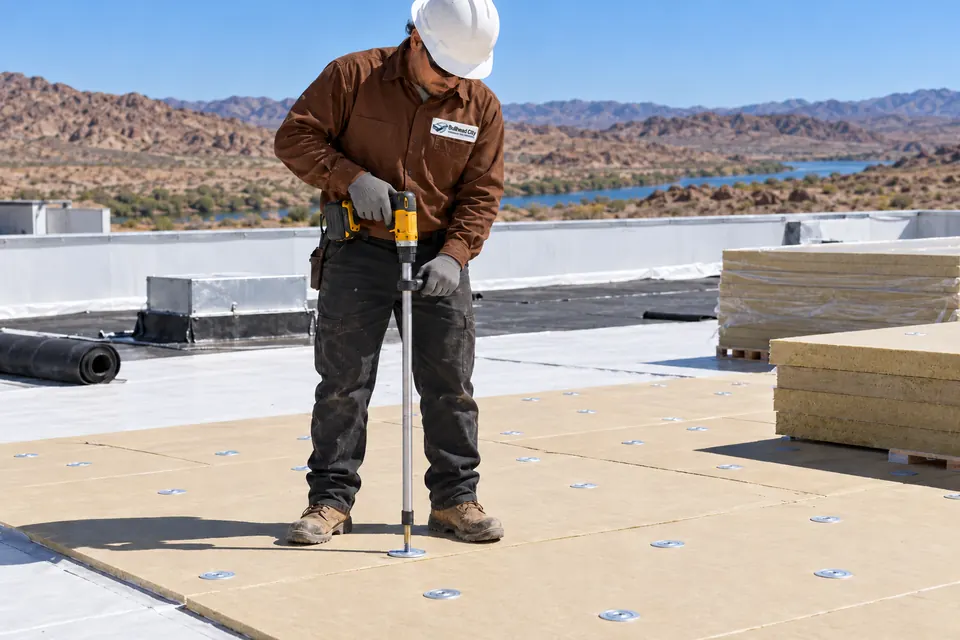
The biggest sheets the roof allows are rolled out and adhered, so the layout ends up with as few seams as possible.
Each lap is cleaned and primed before seam tape goes on, then pipe boots, curbs, and wall corners are flashed.
On simpler decks or steel buildings, one of these two can be the better match.
White TPO with welded seams is often the lower-cost choice on wide, simple decks over air-conditioned space.
Compare TPO roofing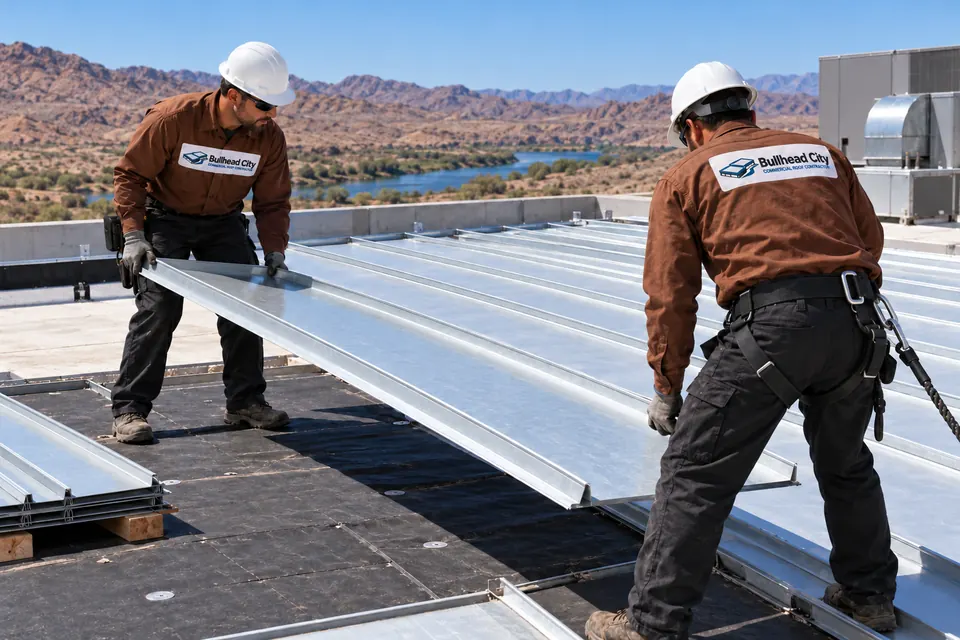
Pitched steel buildings and riverfront structures shed monsoon rain fast under standing-seam or structural metal panels.
Compare metal roofingAnswers about seams, color, and repairs on rubber roofs.
It runs hot, but the rubber handles the heat. The concern is the space below. Black EPDM absorbs sun, so many desert owners choose white-on-black EPDM or add a reflective coating. Both keep the flexible rubber and cut the heat soaking into the building.
EPDM laps are joined with seam tape or adhesive instead of heat welding. The rubber is cleaned and primed first, then the tape is pressed in with a roller. Most EPDM seam problems trace back to skipped primer or a dusty lap, so prep gets the most time.
Yes, when the old sheet still flexes. New rubber is spliced to the existing membrane with primed seam tape, so the roof stays one system. A brittle or chalky old sheet takes primer poorly, and replacing that area makes more sense than splicing to it.
Age and sun. Over many summers the rubber loses a little of its size, and it pulls hardest at walls and curbs. That tension opens gaps at inside corners and stretches flashing until it tears. Shrinkage at a parapet is a common reason for a leak on an older EPDM roof.
It works well with protection. Walkway pads adhered to the membrane carry boots and tool carts from the roof hatch to each unit. Without pads, dropped tools and repeated traffic wear thin spots and punctures in the rubber.
Often, yes. Punctures, torn flashing, and lifted laps are patched with cured EPDM and primed tape once the surface is dry. A storm that lifted large areas of the sheet, or soaked the insulation, points toward replacing that section instead.
EPDM is a rubber sheet, usually black, that feels soft and slightly stretchy underfoot. Its seams are flat taped laps, sometimes with a visible edge of adhesive. TPO, by comparison, is usually white with a welded lip at each seam.
Tell us about the stain or the shrinkage you are seeing, or call and walk us through the roof.
Leave a name and number, and a roofing contact will call you back about your building.
Or call (623) 310-0188 now