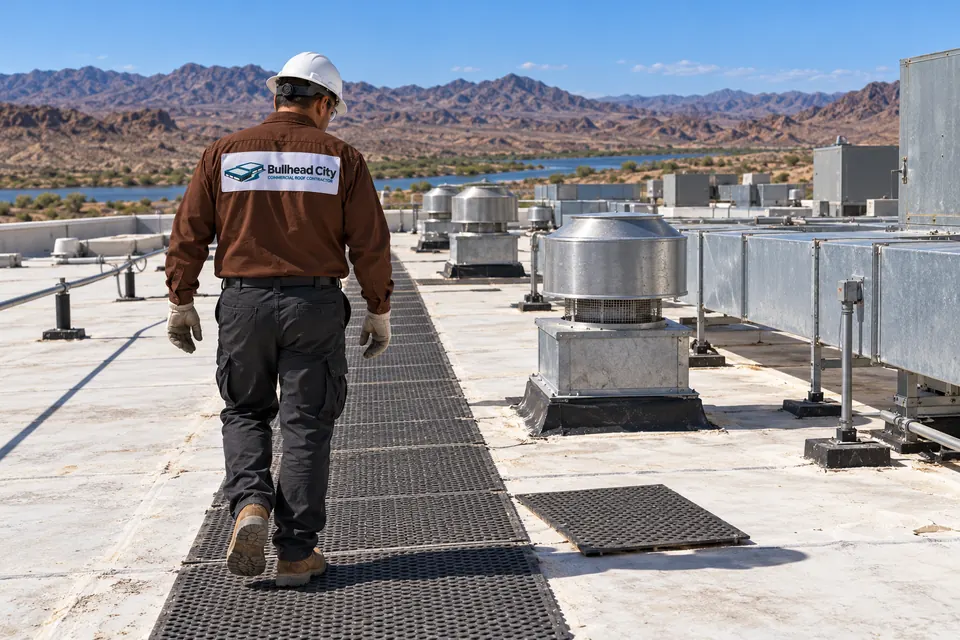
Industrial Roofing
Warehouses and shops with fans, skylights, and production below need a phased plan as much as new panels.
See industrial roofing
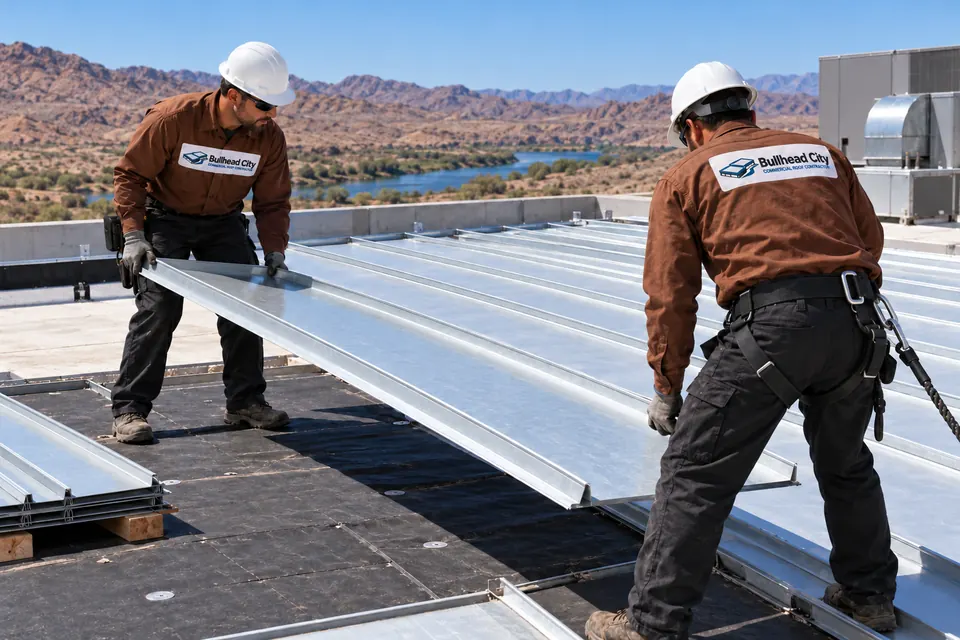
As a commercial metal roofing contractor in Bullhead City, we install new panel roofs, restore fasteners and seams on older ones, and frame metal over worn flat roofs.
Metal fits pitched steel buildings and roofs that need to shed water fast. These lists show where it fits and where a membrane works better.
A metal roof tells you about its fasteners and laps long before panels fail. Each pair shows where to look.
Evenly spaced drips usually line up with a row of fasteners overhead.
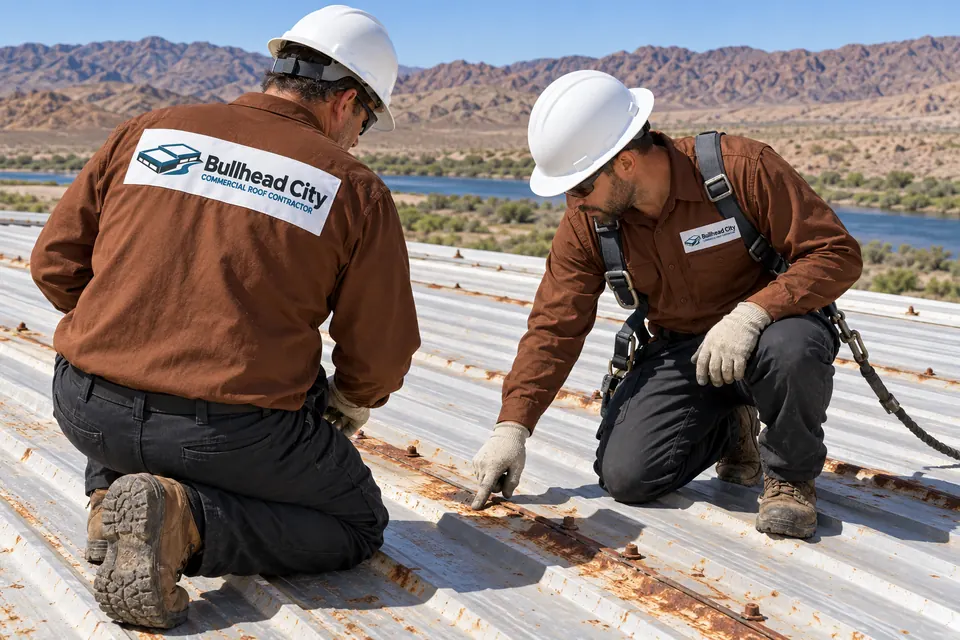
Exposed fasteners have backed out or their rubber washers have cracked in the sun, letting water down the shank.
Orange stains near the low side of the roof point to the panel ends.
Rust at panel laps and cut edges, where water sits longest and the factory finish wears first.
Loud movement during wind means part of the roof is no longer held tight.
Loose trim, lifted edge metal, or panels with too few fasteners for the city design wind of 100 mph.
Water around a translucent panel shows up after hard rain.
Sealant at the skylight panel laps has dried out, or the panel itself has cracked from sun exposure.
Sagging or stained insulation along the sidewalls points to the edges of the roof.
Failed sealant at end laps, ridge caps, or sidewall flashing, often the first joints to open on an older roof.
Most metal roofs here fail at fasteners, sealant joints, and laps first. That shapes which of these paths makes sense.
| Path | When it fits | What the work involves |
|---|---|---|
| Fastener and seam restoration | Panels are intact and leaks trace to fasteners, laps, or sealant | Replace or oversize worn fasteners, reseal laps and trim, treat light surface rust |
| Panel section replacement | Rust-through or storm damage in specific areas | Remove damaged panels, install matching panels, re-flash trim and penetrations |
| Full panel replacement | Corrosion or hail damage is widespread | New standing-seam or structural panels fastened to the design wind values the city requires |
| Retrofit framing over a flat roof | A worn low-slope roof on a structure that can carry new framing | Light-gauge framing adds pitch, then metal panels go over the old roof |
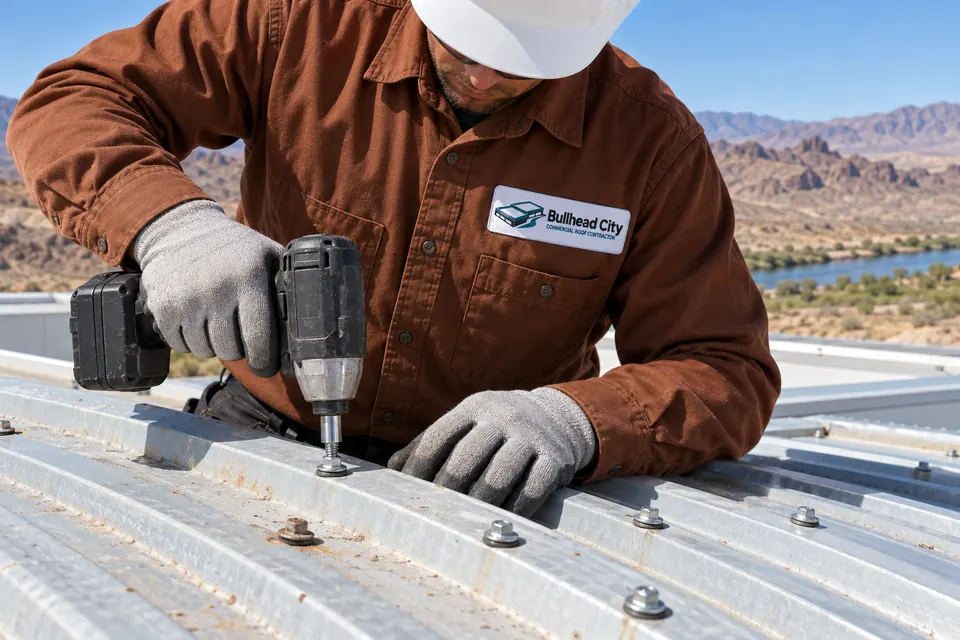
These gains depend on correct fastening and detailing. They show most on steel buildings and roofs that need to shed water fast.
Sloped panels shed heavy rain quickly instead of holding it at seams.
Correct fastener spacing holds panels against the gusts monsoon storms bring.
Light-colored factory finishes reflect sun and resist chalking in desert UV.
Clips under the panel ribs keep fastener holes out of the weather.
Call and tell us where the noise or the drip is. Loose fasteners and trim often need only a repair.
(623) 310-0188A fastener restoration and a new panel roof follow the same four steps, in the same order.
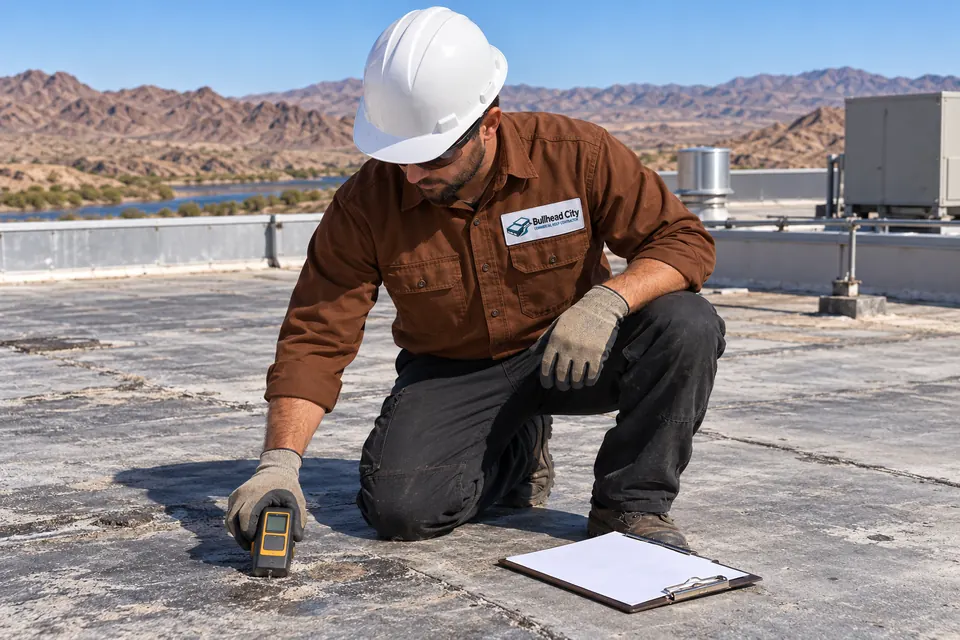
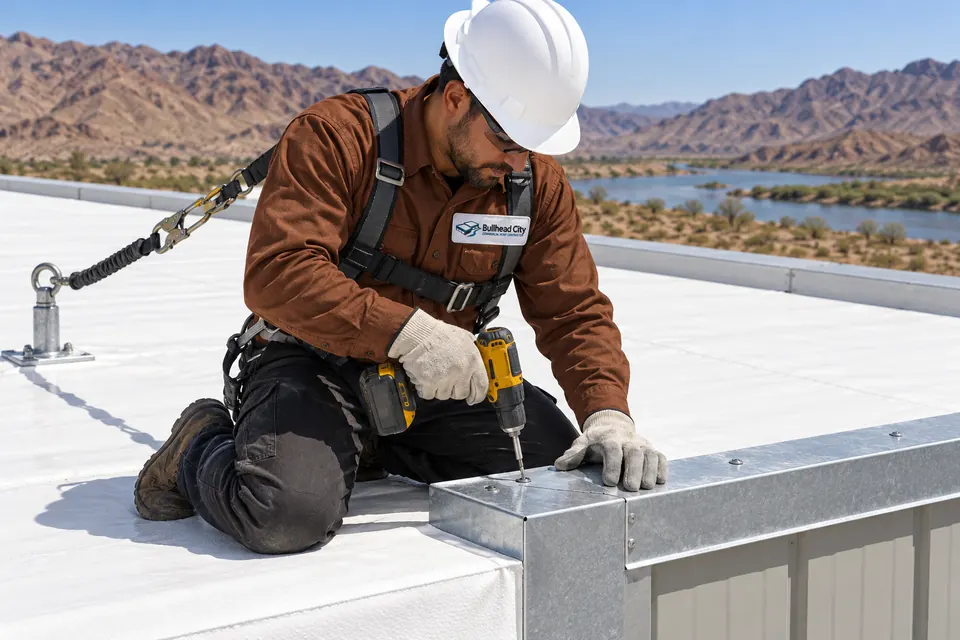
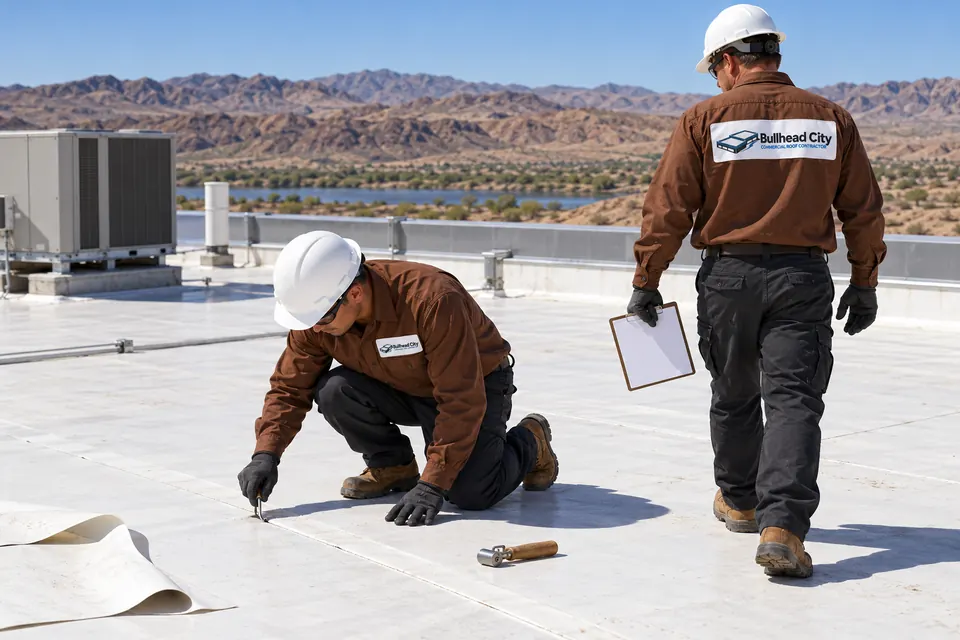
Fasteners are checked row by row, laps and sealant joints are probed, and rust is mapped so the repair-or-replace call rests on what the panels show.
Purlins, clips, and framing are looked at for rust and movement, and new loads from retrofit framing go to the permit office for review.
New fasteners go in at the spacing the design wind calls for, and laps, ridge caps, and trim get fresh sealant.
Edge metal and penetrations are flashed, cut edges are treated, and the final walk checks every fastener row.
Many buildings here mix metal and membrane. These two pages cover the other half.
Warehouses and shops with fans, skylights, and production below need a phased plan as much as new panels.
See industrial roofing
Low flat sections beside a metal building, such as office add-ons, often get welded white TPO.
See TPO roofingAnswers about fasteners, rust, retrofits, and new panel roofs.
For most steel buildings and sloped roofs, yes. Panels shed a monsoon downpour quickly, hold against gusts when the fastener spacing is right, and come with light factory finishes that reflect sun. Shops, warehouses, and newer sloped-roof retail get the most out of metal.
Often, yes. Older metal roofs here fail first at exposed fasteners, sealant joints, and panel laps. Replacing fasteners, resealing laps and trim, and treating light rust can bring a roof with intact panels back into service. Rust-through across most of the roof calls for new panels.
Light-gauge framing built on top of an old low-slope roof to give it pitch. Metal panels go over the framing, so water runs off instead of sitting on the old membrane. The existing structure has to carry the added weight, which the permit office reviews.
Gusts pull on panel edges, trim, and ridge caps. Panels fastened with too few screws, or with screws that have backed out, start to move and loosen more each storm. The city lists a basic design wind speed of 100 mph for Risk Category II buildings, and new panels are fastened to that value.
Yes, though less than most roofs. Check fasteners and sealant at laps, ridge caps, and penetrations each spring and fall. Clear gutters of windblown sand, and touch up scratches in the factory finish so rust cannot start at bare steel.
Water that sits, and steel left bare. Rust starts at panel laps, cut edges, and scratches in the finish, where moisture lingers. Dissimilar metals, such as copper pipe resting on steel panels, speed it up. Catching surface rust early keeps it a cleaning and coating job.
Standing-seam roofs take clamp-on solar mounts that grip the seams without drilling through the panels. Exposed-fastener roofs need flashed mounts at each attachment. Either way, the roof should be checked and repaired before an array goes on, since removing it later for roof work adds cost.
Tell us about the building, the panels, and where water or noise shows up, or call to describe it.
Leave a name and number, and a roofing contact will call you back about your building.
Or call (623) 310-0188 now