Low-slope retail and offices
TPO Roofing
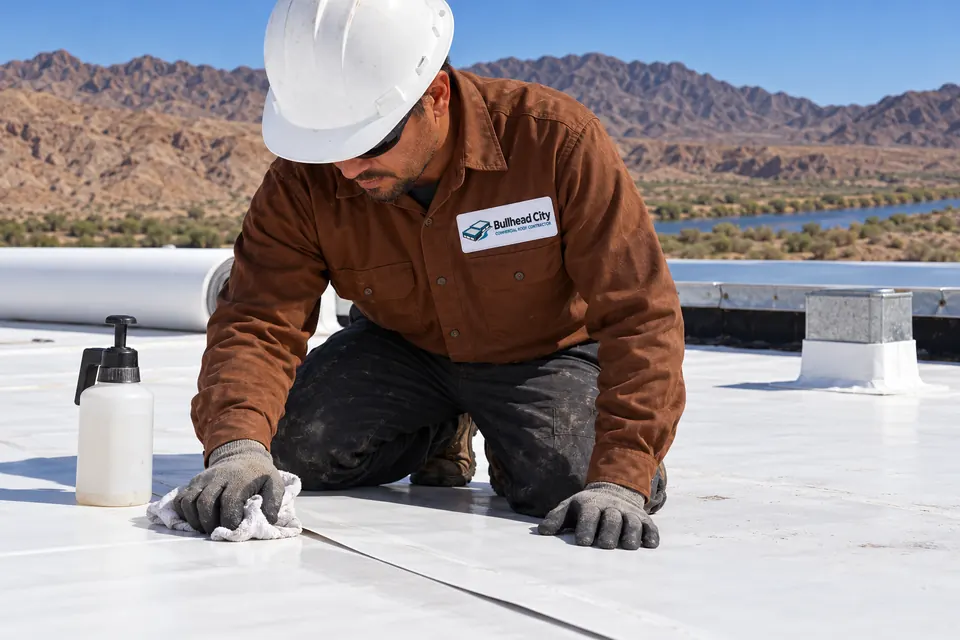
White, heat-welded membrane for wide flat decks along SR 95. A welding machine joins every lap, each weld gets probed, and curbs and drains get welded flashing.
TPO roofing contractor details
As a commercial roofing contractor in Bullhead City, we install, replace, and repair TPO, EPDM, industrial, and metal roofs on stores, offices, warehouses, and shops.
Most roof calls start indoors. Match what your staff noticed to the roof detail that tends to cause it.
Brown rings around an air vent show up after a monsoon cell, then dry out for weeks.
Curb flashing around the rooftop unit above has split or pulled loose, so wind-driven rain runs down the duct.
Water finds the electrical box first because it is the easiest path through a ceiling grid.
A drain or scupper packed with dust lets water stand against a seam until it finds a gap.
Odor with no visible stain often means water is sitting above the ceiling tiles.
Wet insulation under the membrane. A moisture meter or core cut finds it before the deck rusts or rots.
Tiles bow on the parapet side of the room, most often after wind-driven rain.
Parapet flashing or coping has opened, so rain gets behind the membrane at the wall.
Cooling units cycle nonstop upstairs while lower floors stay comfortable.
A dark or chalked roof surface is soaking up sun. A white TPO membrane or reflective metal finish changes what the roof absorbs.
Banging from the ceiling of a metal shop during gusts points to loose metal above.
Exposed fasteners have backed out or edge metal has lifted, so panels move with every gust.
Each system fits a different kind of Bullhead City building. Start with the one that matches your roof slope and rooftop equipment.
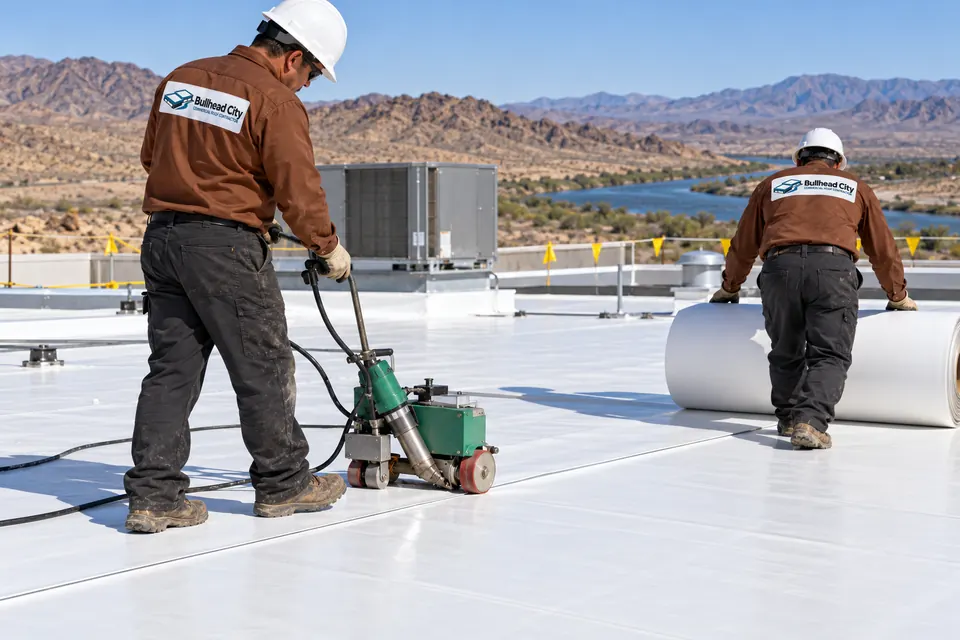
White, heat-welded membrane for wide flat decks along SR 95. A welding machine joins every lap, each weld gets probed, and curbs and drains get welded flashing.
TPO roofing contractor details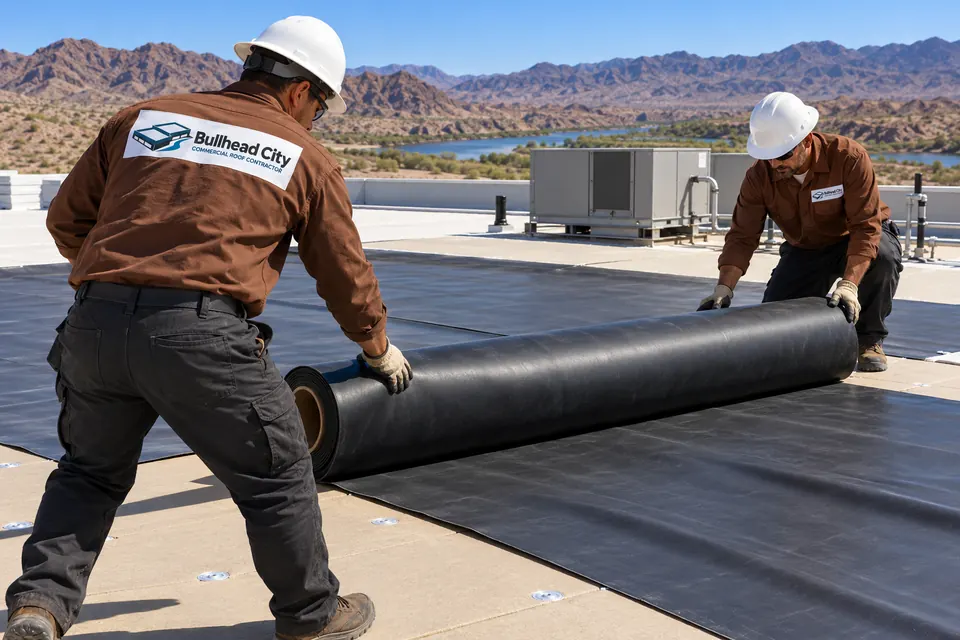
Large rubber sheets that tie in around odd shapes, old repairs, and crowded equipment. Seams are taped or glued, so seam prep decides how long they last.
EPDM roofing contractor details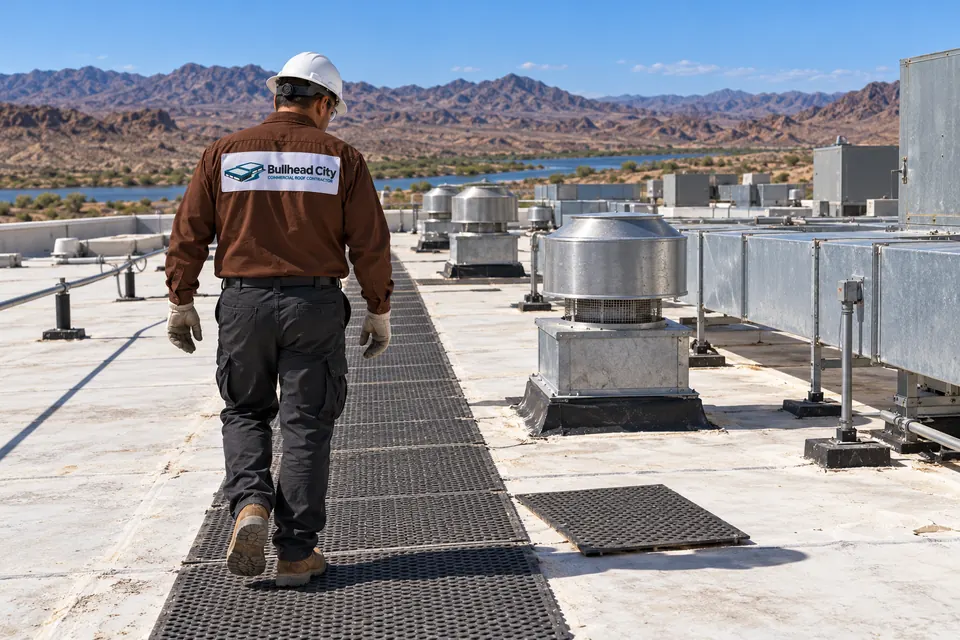
Long-span roofs with exhaust fans, skylights, and conduit. Work runs in sections so production areas stay dry, with walkway pads along service paths.
Industrial roofing contractor details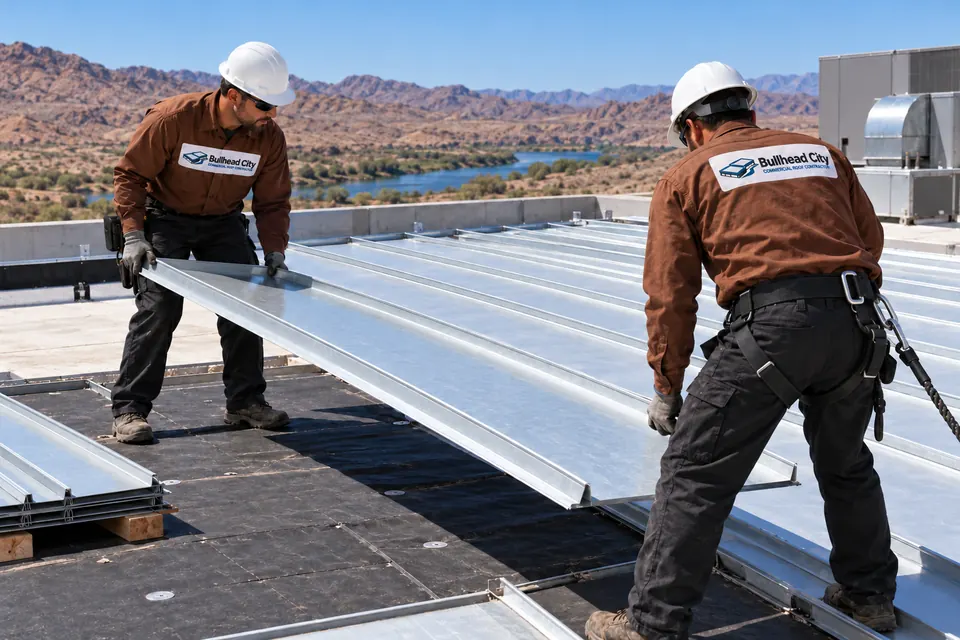
Standing-seam and structural panels, fastener and seam restoration, or retrofit framing that adds pitch over an old flat roof.
Metal roofing contractor detailsCall while the stain is fresh. Tell us which room it showed up in and what sits on the roof above it.
(623) 310-0188The answer comes from what is under the membrane. These signs lean one way or the other before anyone opens the roof.
Results depend on the system and the building. These are the changes owners in Bullhead City notice first.
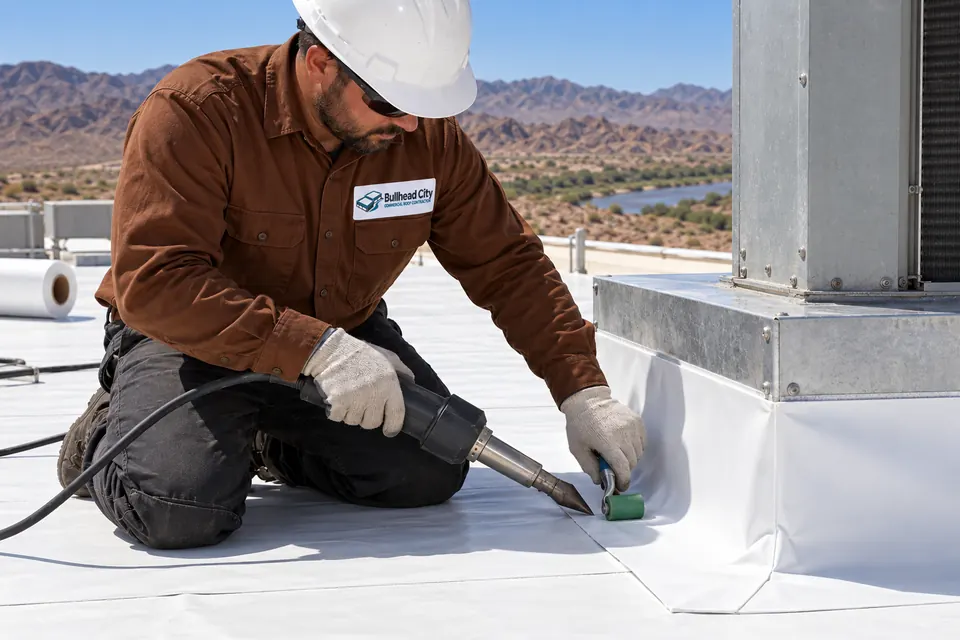
A white TPO surface reflects much of the sunlight a dark, chalked roof absorbs.
Welded TPO laps and correctly fastened metal panels hold up to hot afternoons followed by cooler nights.
Tapered insulation, crickets, and cleared drains move monsoon water off the roof instead of letting it sit.
New flashing goes on at rooftop units, parapets, and pipes, where most leaks start.
Spring and fall checks compare against a new roof, so changes stand out early.
The order stays the same on every building, from a one-tenant shop to a long warehouse.
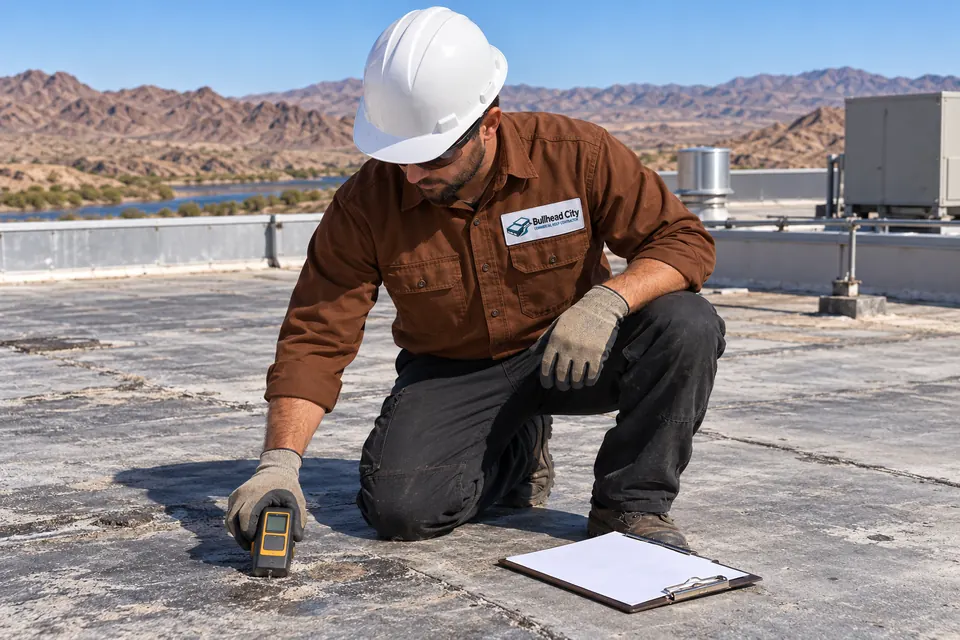
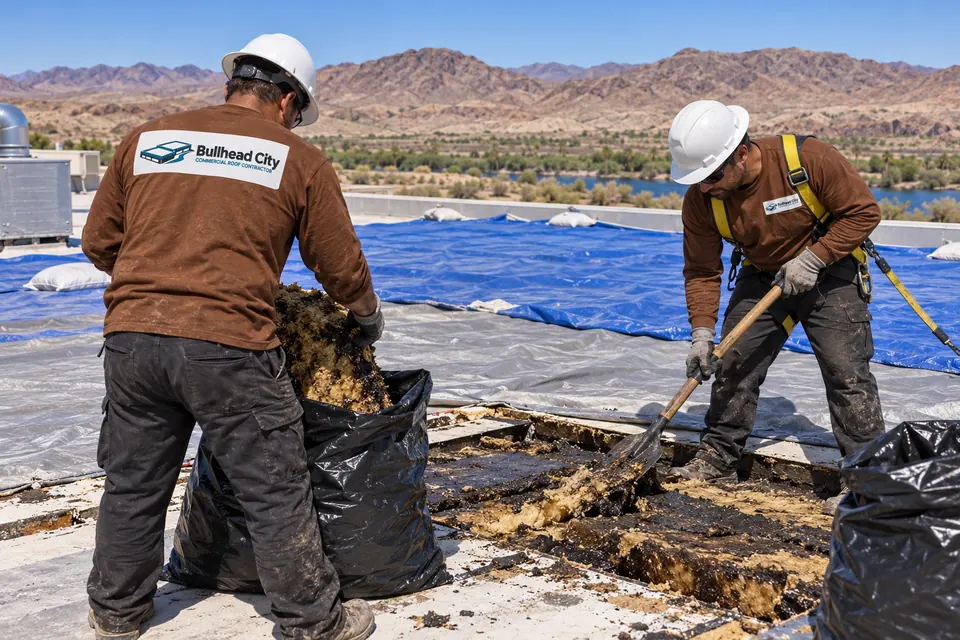
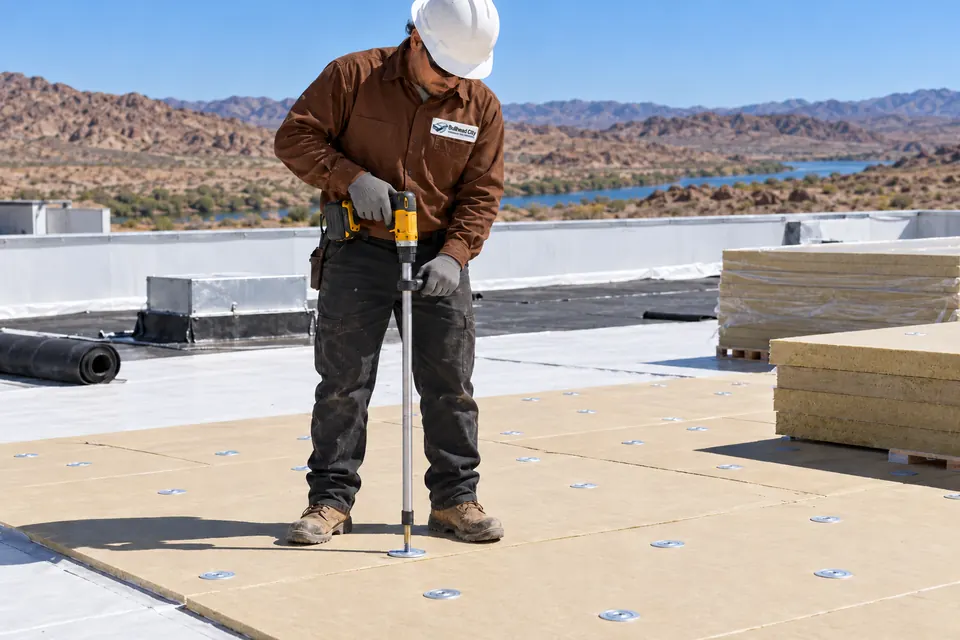
A roofer walks every section with a moisture meter, checks seams, curbs, drains, and edge metal, and looks at the ceilings below for stains.
Dry insulation and local damage point to repair. Wet insulation across large areas or failed seams point to a new TPO, EPDM, or metal roof.
Old roofing comes off in sections that are sealed before each shift ends, so the stores and offices below stay dry.
Curbs, parapets, and drains get new flashing, welded seams are probed, and drains are cleared before the final walk.
Five communities sit south of Bullhead City along SR 95 and the river. Each has its own permit office and building mix.
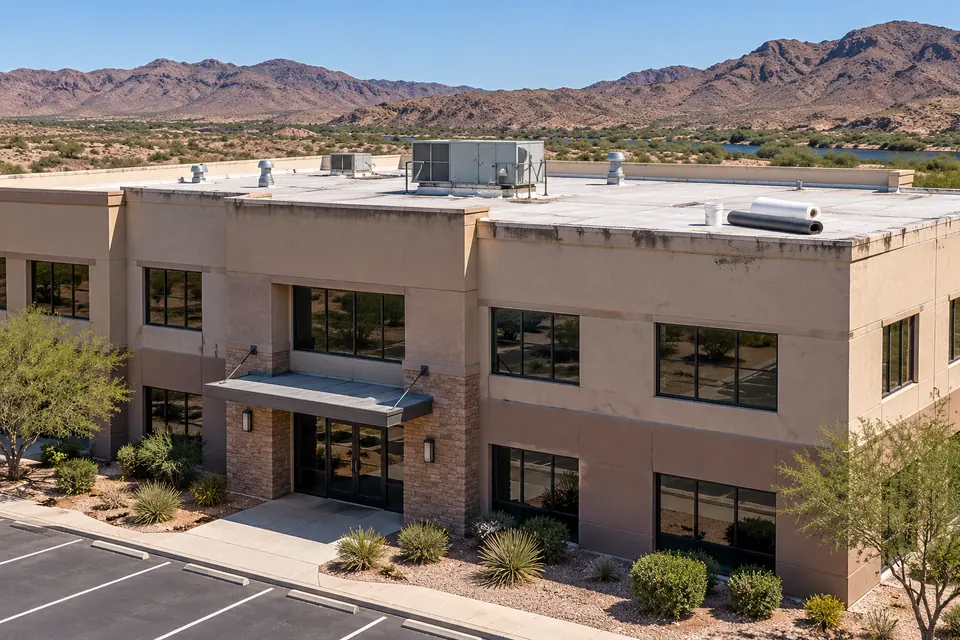
Two-story offices and medical buildings inside city limits, crowded with rooftop units and under City of Bullhead City permits.
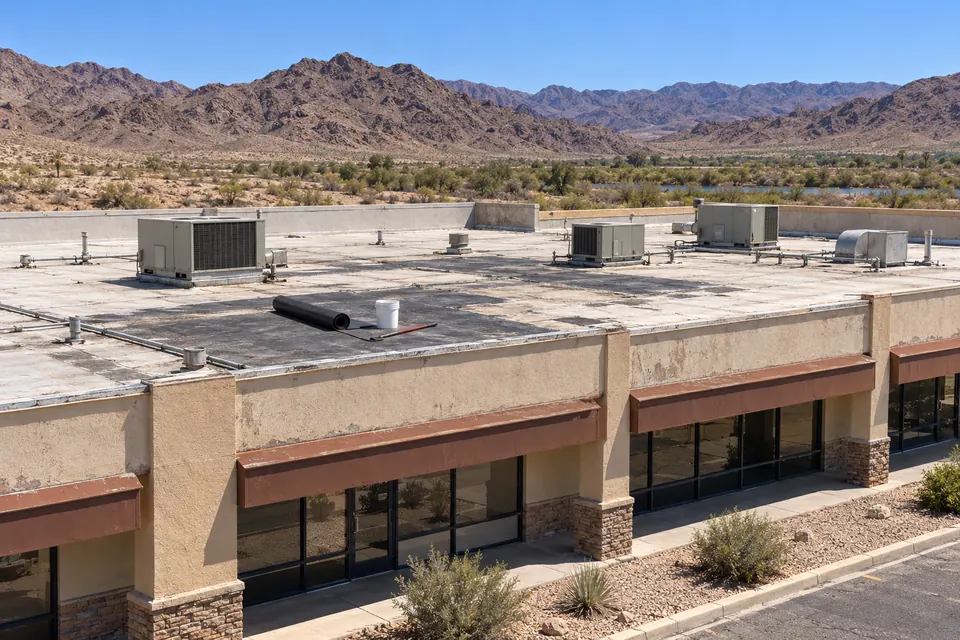
Retail and office roofs along SR 95, where some parcels sit on Fort Mojave Indian Reservation land with its own building department.
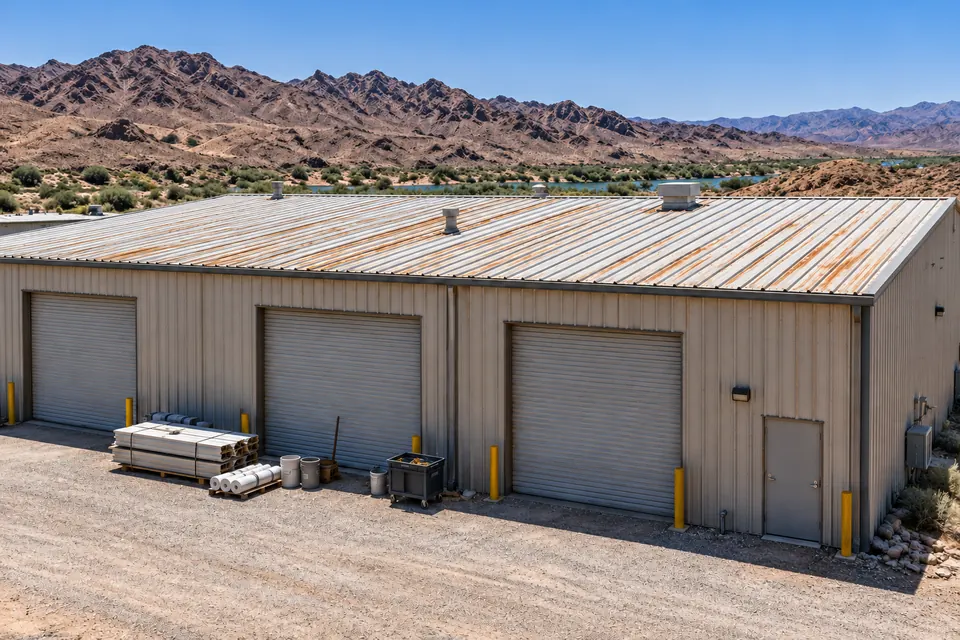
Warehouses, shops, and storage buildings with long roof spans where small ponding areas grow.
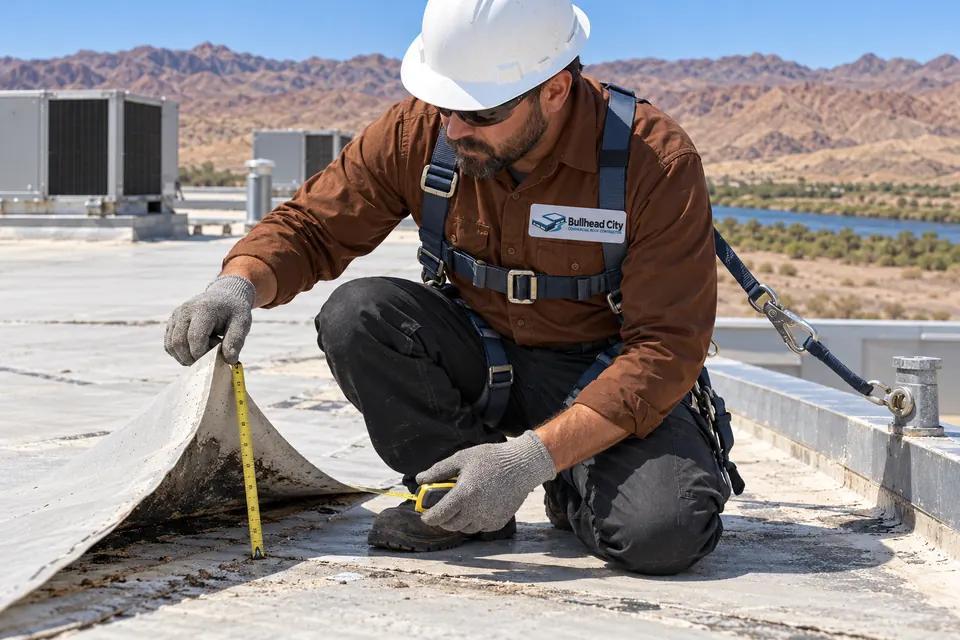
Smaller commercial roofs near the river that need a careful drain and edge check after monsoon storms.
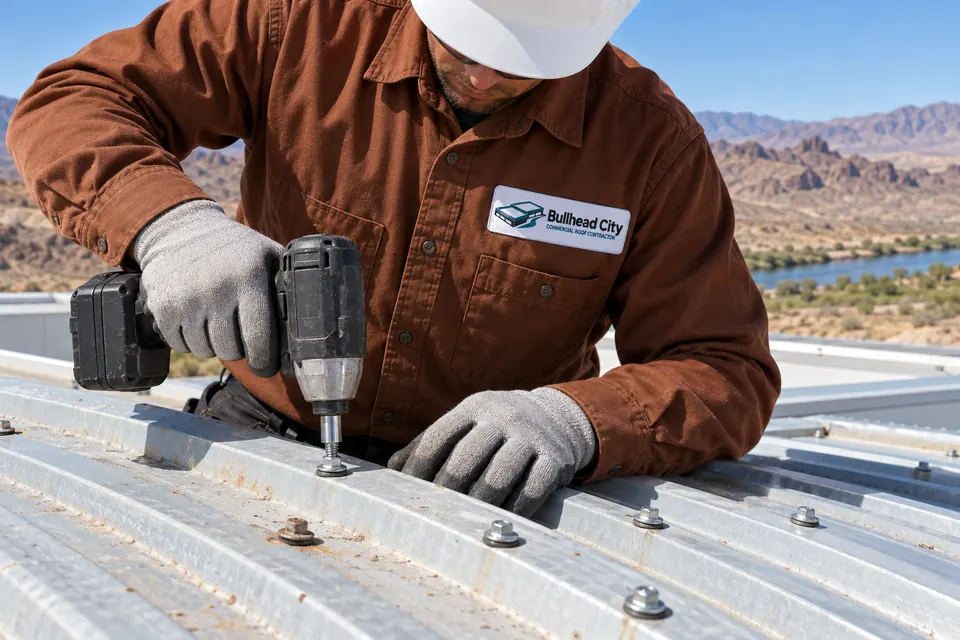
Riverfront and marina structures near I-40, mostly metal roofs in full sun.
Short answers about heat, storms, and roof life. The full FAQ covers permits, taxes, and utilities.
It dries and ages the roof faster than a milder climate does. Long summer afternoons push roof surfaces far above the air temperature, so sealants dry out and membranes age early. Hot days followed by cooler nights work seams, flashing, and fasteners loose, and monsoon storms add short bursts of heavy rain, dust, and gusts.
With good installation and regular care, TPO runs about 20 to 30 years, EPDM about 25 to 30, and metal 40 or more. Desert heat can shorten each range. Thin membranes, weak seam welds, and loose fasteners cut those numbers the most, so they get the closest look during installation.
Storm leaks come from water moving sideways. Monsoon rain arrives with strong gusts that push water under flashing, into open panel laps, and past curb seals that stay dry in a light shower. A leak that shows up only in storms points to a detail at the roof edge, a rooftop unit, or a wall.
Sometimes. A recover layer goes over an existing roof only when a moisture check shows dry insulation and a deck that still holds fasteners. Wet sections come out first. Building codes also limit how many roof layers a deck can carry, and the permit office checks that before work starts.
It changes how much sun the roof absorbs. A white TPO membrane reflects a large share of sunlight that a dark or chalked surface soaks up, so less heat moves into the space below. How much that shows on a cooling bill depends on insulation, ceiling height, and the units on the roof.
Find out why it stays. Clogged drains and scuppers are the first check here, since blowing dust packs them fast. Low spots from a sagging deck or crushed insulation come next. Tapered insulation or crickets fix the slope during a new roof or when a section is rebuilt.
Often they are lifted onto taller curbs. A curb too short to flash correctly gets raised so the new membrane can run up its sides to the height the manufacturer calls for. The HVAC contractor disconnects and resets each unit, and the roof work is scheduled around that visit.
Send the roof size and what you are seeing, or call and describe it. Every estimate starts from an inspection of the actual roof.
Leave a name and number, and a roofing contact will call you back about your building.
Or call (623) 310-0188 now