TPO Roofing
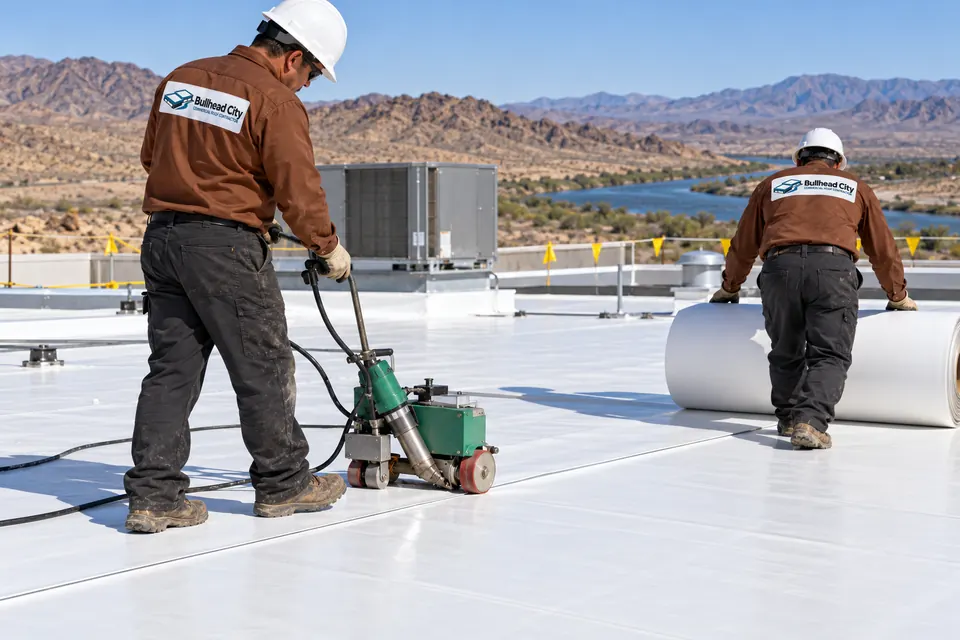
Welded TPO with fastened edge metal suits small flat commercial roofs that take the brunt of monsoon gusts.
TPO roofing details
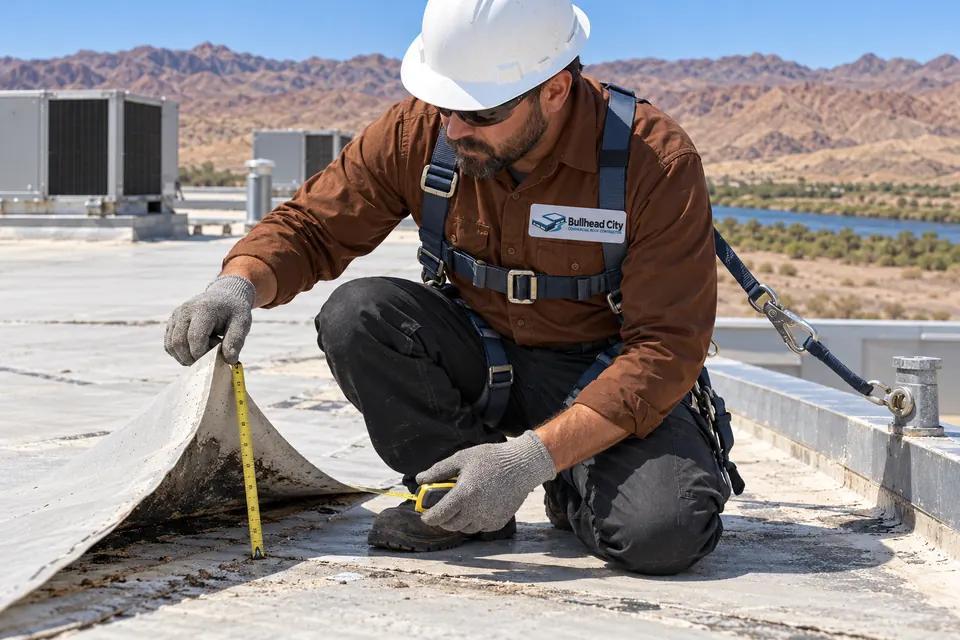
As a commercial roofing contractor serving Golden Shores, we inspect and repair storm-damaged roofs on smaller commercial buildings near the river, and replace what a repair can't hold.
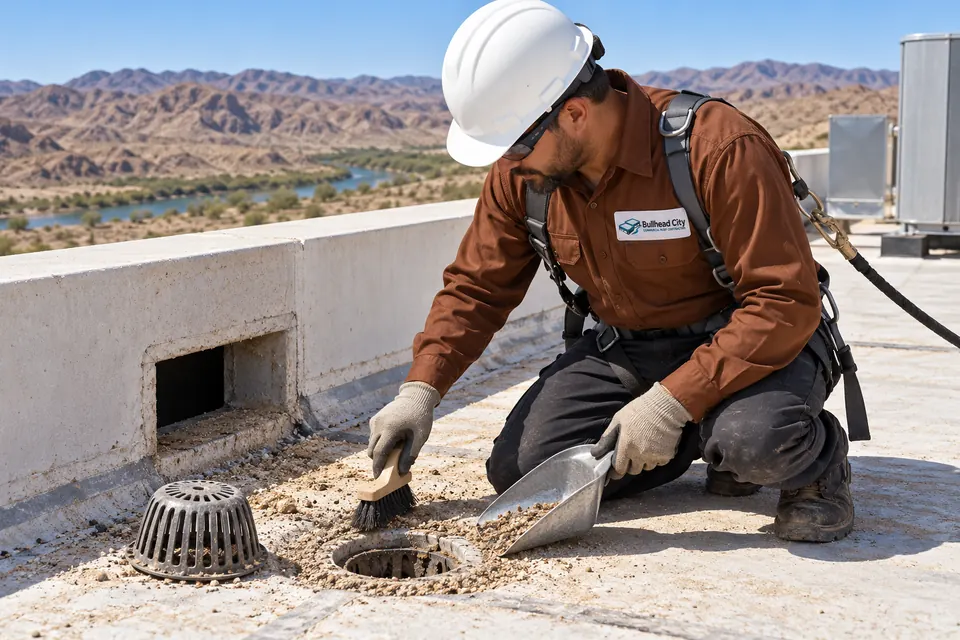
Arizona's monsoon season runs June 15 through September 30, according to the National Weather Service. Storms that reach Golden Shores bring short, heavy rain, blowing dust, and strong gusts, and on a small commercial roof the damage sits at drains, edges, and seams.
A quick check after each storm catches problems before the next one makes them worse. Golden Shores is unincorporated Mohave County, so permits for repair or replacement go through Mohave County Development Services.
Small buildings show storm damage quickly. Each pair links a sign inside to what the storm did above.
A new stain that appears overnight marks where the storm found a gap.
A lifted membrane edge or an opened lap near the stain, often on the side the wind came from.
Drips in the middle of a room point to water that stayed on the roof.
A drain or scupper packed with storm debris, leaving water to back up across the deck.
Noise during wind means something on the roof has worked loose.
Edge metal pulled up, or a membrane corner lifted, with wind getting under it each gust.
Water collecting in a light lens shows a steady leak above that fixture.
A puncture from windblown debris, or a pipe boot torn loose by the storm.
A sagging tile that grows for days after rain means water is trapped above.
Wet insulation under the membrane. It stays wet long after the surface dries and needs to come out.
After repeated storm repairs, a new roof changes what each monsoon season brings.
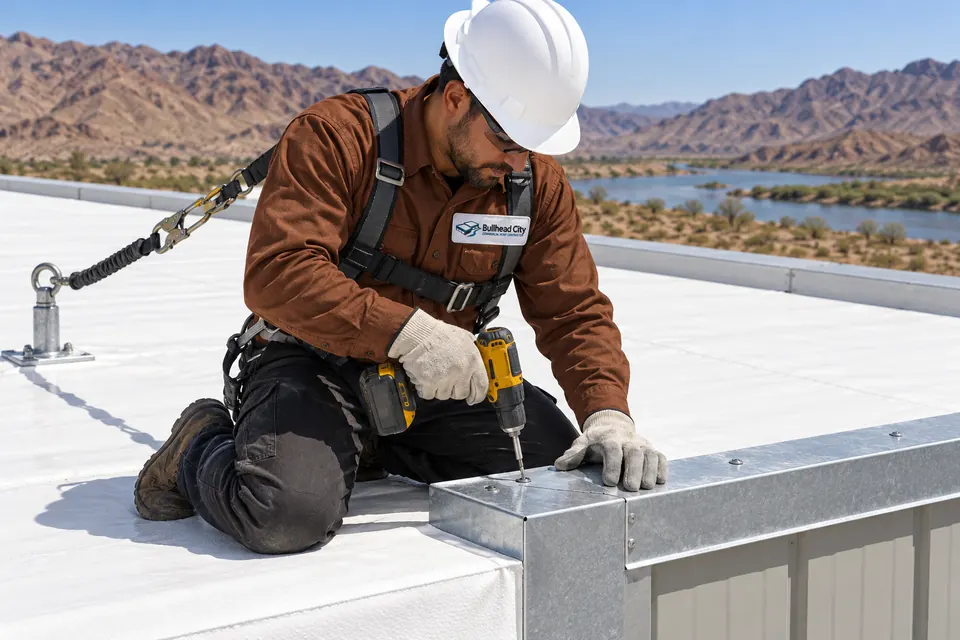
New edge metal and terminations hold the membrane down where storm winds pull first.
Right-sized scuppers and clear drains move heavy rain off a small roof fast.
New welded or taped laps replace seams that opened after years of storms.
A roof rebuilt at its weak points needs a quick check after storms instead of a patch.
Smaller commercial buildings here are mostly flat membrane roofs. These two systems cover most repairs and replacements.
Welded TPO with fastened edge metal suits small flat commercial roofs that take the brunt of monsoon gusts.
TPO roofing details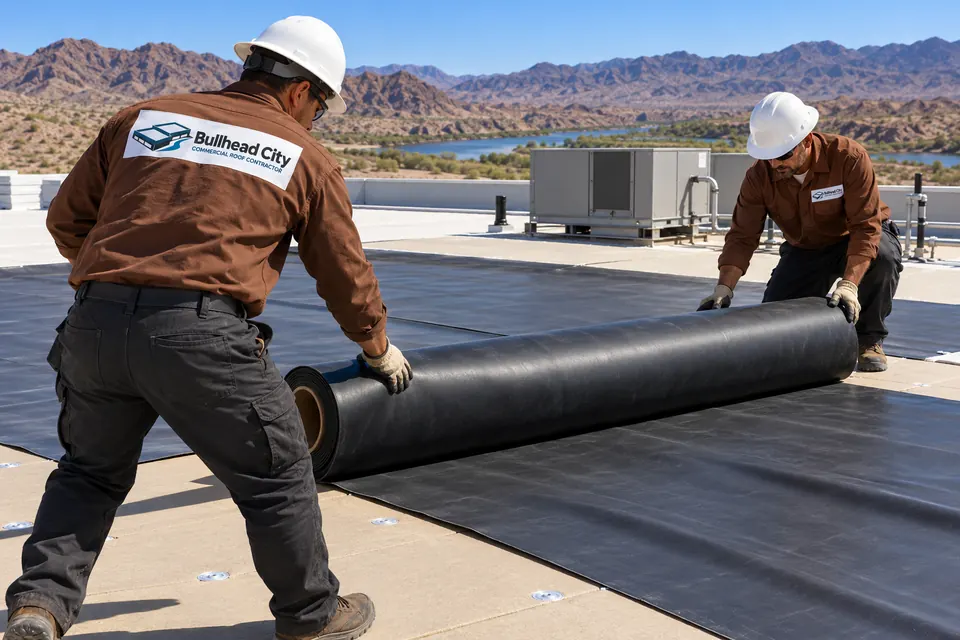
EPDM patches and tie-ins work well when a storm damages part of an existing rubber roof.
EPDM roofing detailsCall and tell us what you see inside and on the roof. Dated photos help with insurance, so take them before anything is moved.
(623) 310-0188Each storm call follows the same order, from the first walk to the lasting fix.
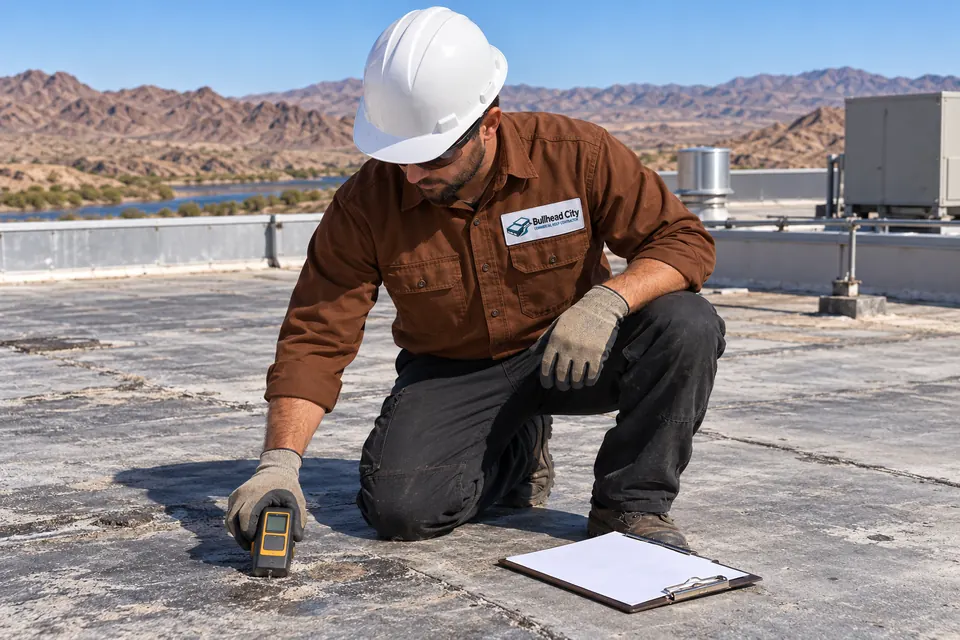
Drains, edges, seams, and pipe boots are checked first, damage is photographed with the date, and moisture readings show how far water spread under the membrane.
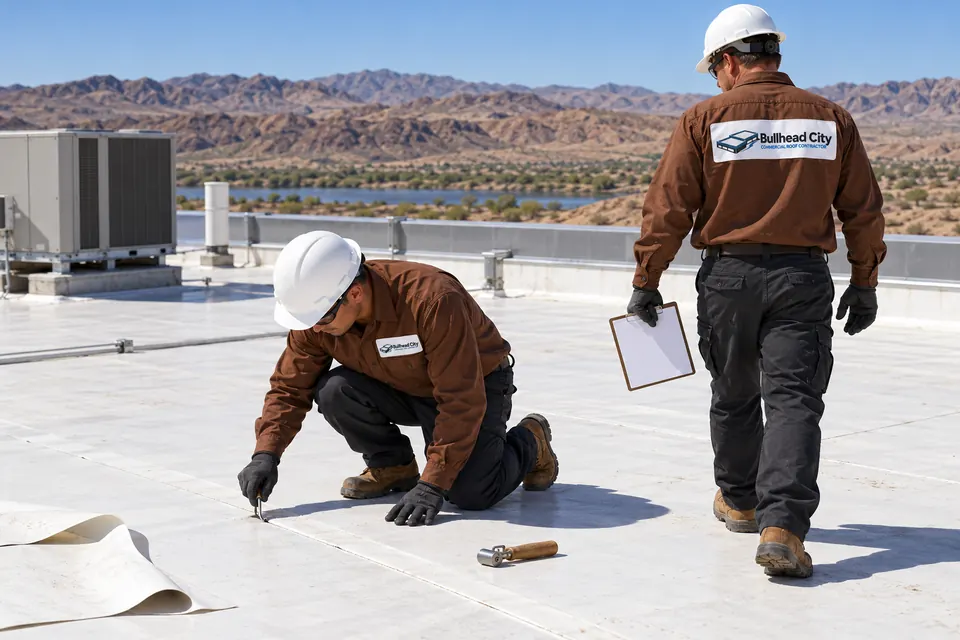
Temporary patches close open laps and punctures until the surface is dry enough for a lasting repair with proper materials.
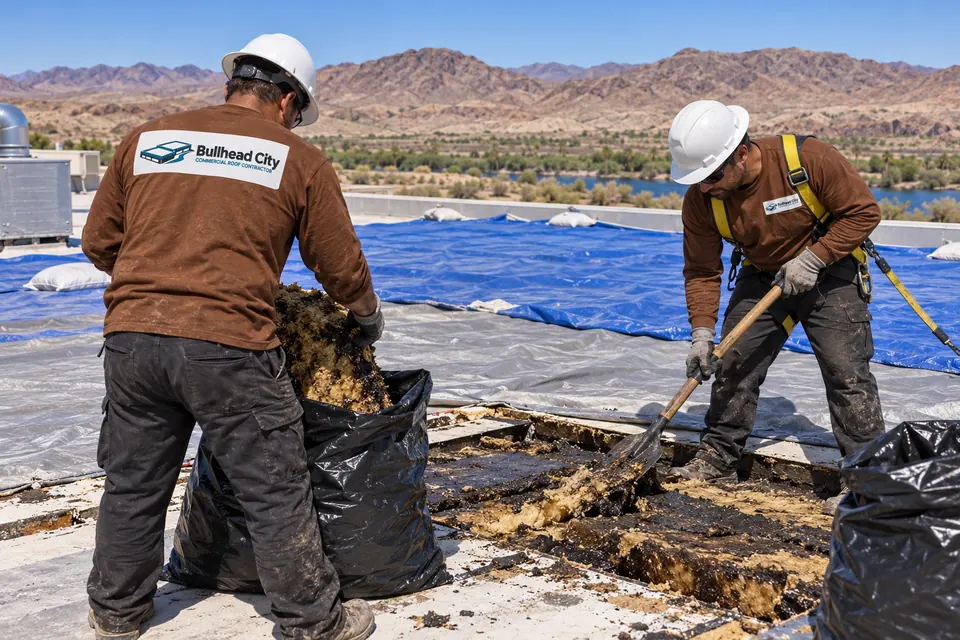
Damaged edges and laps are rebuilt, and sections with wet insulation are cut out and replaced with new board and membrane.
Scuppers and drains get cleared, and the roof is walked again after the next storm to confirm the repairs held.
Neighboring towns along the river and SR 95.
Riverfront metal roofs just to the south.
Warehouses and storage up SR 95.
Retail roofs where some parcels are tribal land.
The center of the service area, upriver.
Answers about storm damage, temporary patches, permits, and utilities.
Start at the drains, then look for standing water, lifted edges, and debris on the roof. Inside, look for new stains, drips at fixtures, or a damp insulation smell. Date your photos for insurance, keep staff off a wet roof, and call if seams, metal, or flashing look damaged.
That depends on your policy and on what caused the damage. Insurers look for sudden storm damage, such as lifted edges or punctures, rather than wear. Dated photos, a written inspection, and quick temporary repairs help a claim. Your agent can confirm what the policy covers.
It buys time, and that is all. Temporary patches go on wet or dusty surfaces to stop active leaks. A lasting repair needs a dry, clean surface and the right materials for the membrane, so plan the permanent fix before the next storm.
Check a recent bill. Most of Bullhead City is served by Mohave Electric Cooperative, with UniSource Energy Services covering a smaller area, and reservation parcels can be served by Aha Macav Power Service. Confirm the provider in outlying communities such as Golden Shores before asking about any cool-roof program.
Mohave County Development Services. Golden Shores is unincorporated, so building permits come from the county, and its permit application includes a re-roof option for commercial work. The county's building and permitting office in Bullhead City is the closest one.
Wind pulls hardest at edges and corners. When edge metal loosens or a termination bar backs out, gusts get under the membrane and peel it back a little more each storm. Edge metal fastened at the right spacing keeps the wind from getting a grip.
Wait until the surface dries and the wind drops. Wet membrane is slick, lifted edges can catch a foot, and debris hides punctures. Look from the hatch or a ladder first, and leave a full walk to a roofer with fall protection.
When damage keeps spreading. Wet insulation over large areas, many lifted laps, or edges that loosen after every storm mean repairs will chase the next leak. Replacing the roof, or its worst sections, ends that cycle and lets the edges be rebuilt to hold.
Send dated photos and the roof size, or call and describe what the storm did.
Leave a name and number, and a roofing contact will call you back about your building.
Or call (623) 310-0188 now